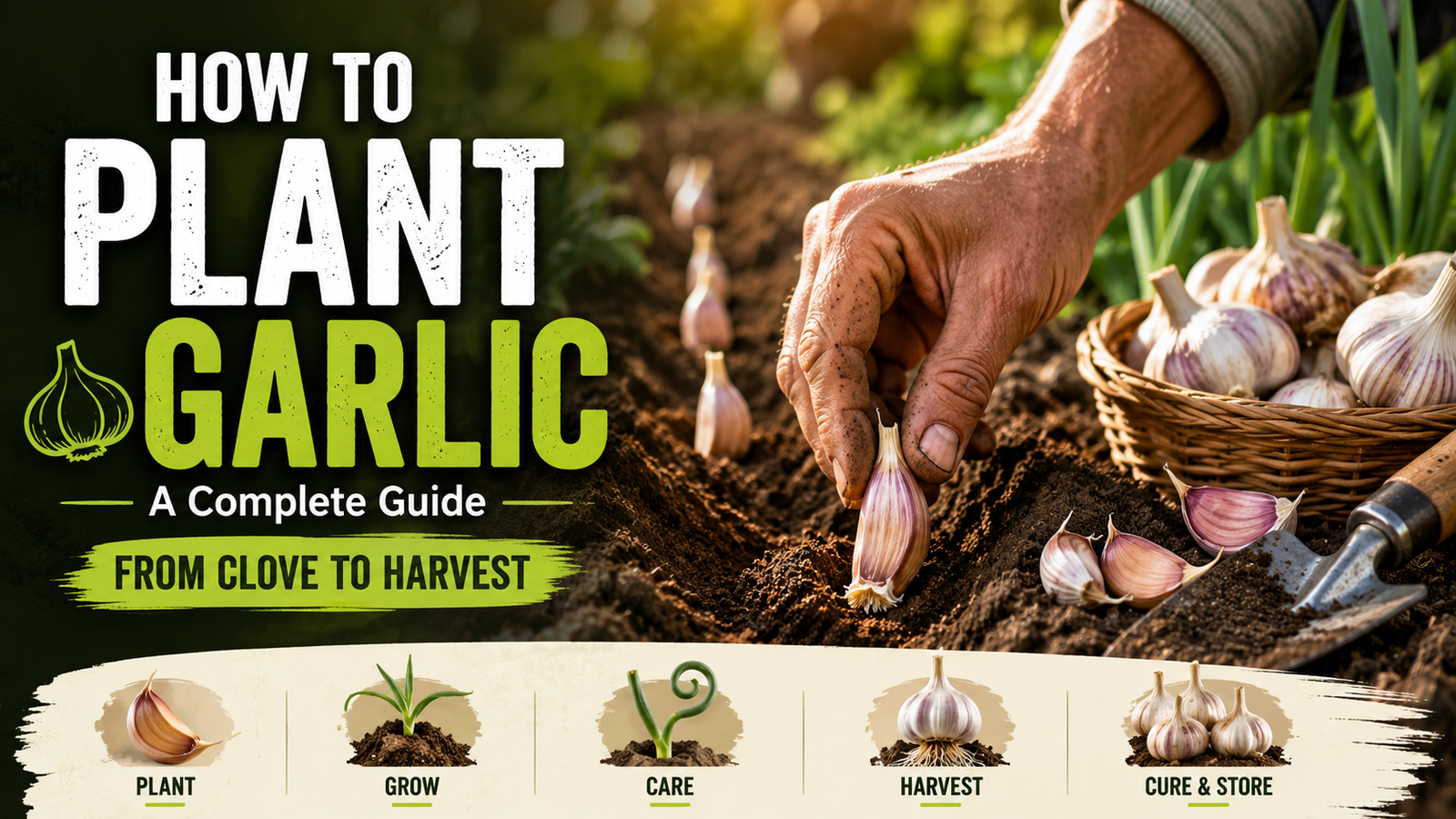

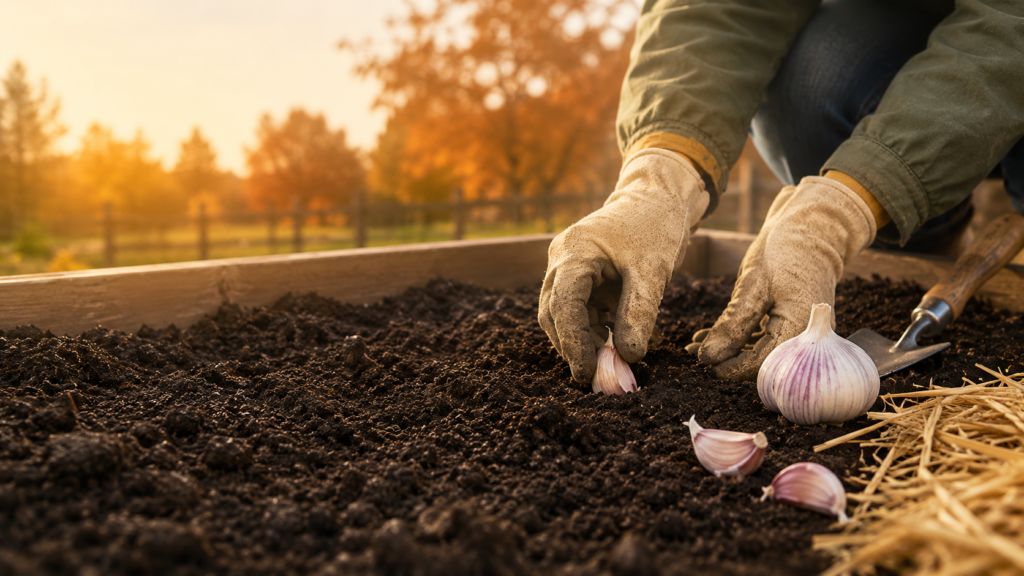
Garlic is usually grown by planting individual cloves, not by sowing a whole bulb. Separate a healthy bulb into cloves, keep the papery skins intact, and plant each clove with the pointed end facing up and the flat root end facing down. In many climates, fall is the preferred planting season because the cloves establish roots before winter and receive the cold exposure that helps bulbs divide well.
This guide follows garlic from planting to harvest, so you can choose the right type, prepare the soil, set the cloves at the right depth and spacing, manage water and mulch, handle hardneck scapes, recognize harvest time, and cure the bulbs for storage.
Garlic Growing at a Glance
| Factor | Garlic prefers |
| Planting material | Individual healthy cloves |
| Best planting season | Usually fall; spring is possible |
| Light | Full sun |
| Soil | Loose, fertile and well drained |
| Clove direction | Pointed tip up; flat root end down |
| Spacing | Usually about 4–6 in (10–15 cm) between cloves |
| Water | Even moisture during active growth; never waterlogged |
| Mulch | Useful for winter protection and weed suppression where appropriate |
| Harvest | Usually late spring through summer, depending on climate and planting time |
| Difficulty | Beginner friendly |
When Should You Plant Garlic?
Planting time is one of the biggest factors in bulb development. Garlic is commonly planted in fall, but the best window depends on winter severity, local soil conditions and the variety you are growing.
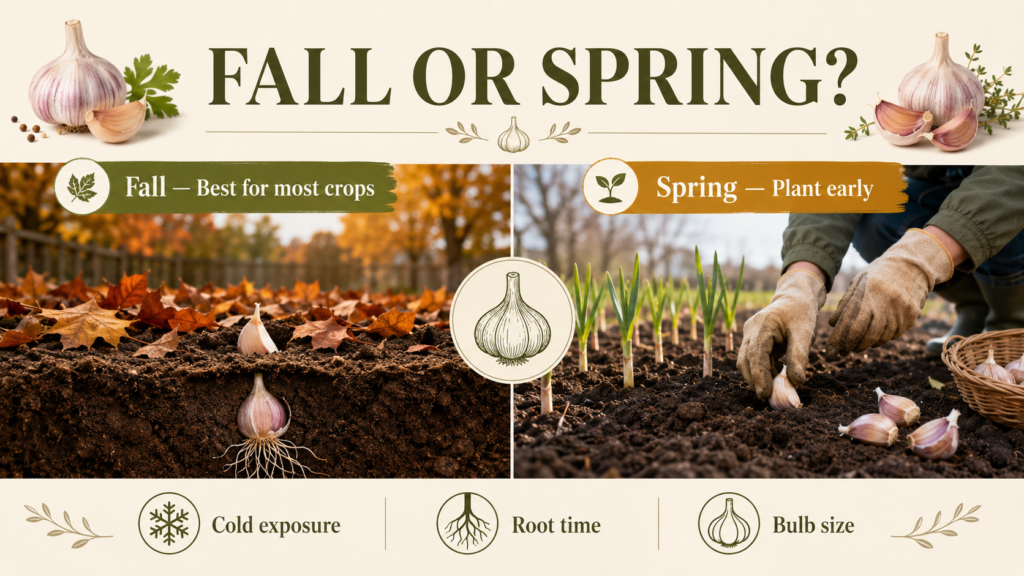
Planting Garlic in Fall
Fall planting gives cloves time to form roots before winter while keeping top growth relatively limited. The following cool period helps many varieties divide into a full bulb of separate cloves. A useful rule is to plant after the soil has cooled but before it freezes solid, leaving enough time for some root establishment.
In very mild climates, planting may be later because severe freezing is less of a concern. In colder regions, growers often plant earlier and use mulch to buffer temperature swings.
Can You Plant Garlic in Spring?
Yes. Spring planting can work, especially when garlic is planted early and the variety receives enough cold exposure. The trade-off is that spring-planted bulbs may have less time to establish and can finish smaller than a well-timed fall crop. If you missed fall, plant as early as workable soil allows rather than waiting for warm weather.
Fall vs. Spring Planting
| Factor | Fall planting | Spring planting |
| Typical use | Main garlic crop | Alternative if fall was missed |
| Cold exposure | Usually provided naturally | May be limited depending on climate |
| Root establishment | Begins before winter | Begins in spring |
| Bulb-size potential | Often stronger | Can be smaller if planted late |
| Best approach | Time for local climate | Plant as early as conditions allow |
Hardneck vs. Softneck Garlic
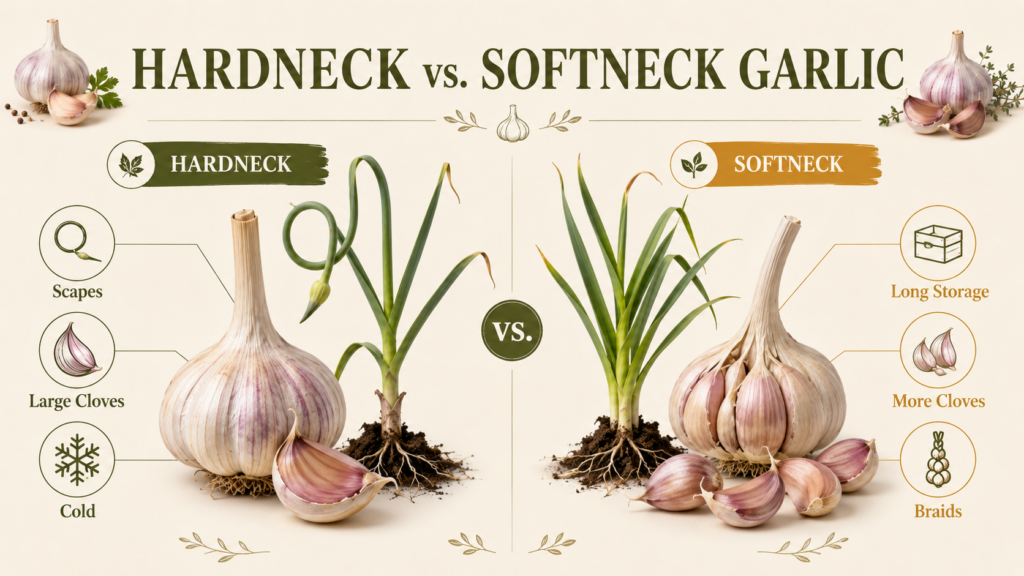
Choosing the right garlic type improves your chances of success because hardneck and softneck garlic respond differently to climate and storage conditions.
| Feature | Hardneck garlic | Softneck garlic |
| Climate | Often preferred in colder regions | Often performs well in milder regions |
| Scapes | Produces a flowering scape | Usually does not make a prominent scape |
| Cloves | Usually fewer, larger cloves | Usually more, smaller cloves |
| Storage | Generally shorter | Generally longer |
| Braiding | Stiff central stem makes braiding difficult | Flexible stems are suited to braiding |
| Why choose it | Cold tolerance, large cloves, scapes | Long storage and broad kitchen use |
What Garlic Should You Plant?
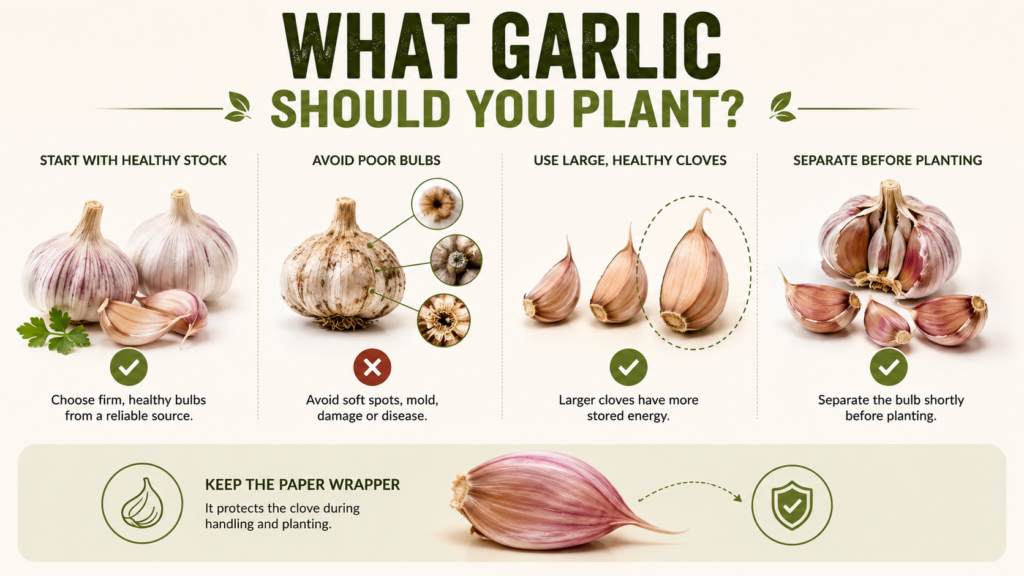
For the most reliable crop, start with healthy planting stock from a reputable supplier or a locally adapted source. Avoid bulbs with soft spots, mold, damaged basal plates or obvious disease. Larger healthy cloves generally have more stored energy and are a sensible choice for planting.
Separate the bulb shortly before planting rather than weeks in advance. Keep the papery wrapper around each clove whenever possible because it helps protect the clove during handling and planting.
Can You Plant Grocery Store Garlic?
Grocery-store garlic can sprout and grow, so the answer is not an absolute no. However, it is less predictable than garlic sold for planting. The variety may not suit your climate, its growing history may be unknown, and imported bulbs may carry a greater disease risk or have been handled in ways that reduce sprouting.
Best choice: use healthy seed garlic or locally adapted planting stock when you want the most reliable bulb formation and disease control.
Where Is the Best Place to Plant Garlic?

Choose the sunniest practical location. Garlic develops its leaves and bulbs best in full sun, and a bright site helps the crop build the energy needed for bulb formation. Avoid low areas that stay wet after rain.
- Aim for full sun, ideally around 6–8 or more hours of direct light.
- Use a bed with good drainage and loose soil.
- Keep the area reasonably weed-free; garlic does not compete well with heavy weed growth.
- Rotate allium crops where possible rather than planting garlic repeatedly in the same diseased soil.
Best Soil for Growing Garlic
Garlic prefers fertile soil that is loose enough for roots and bulbs to expand while still draining freely. Work finished compost or well-decomposed organic matter into the bed before planting. Heavy, compacted soil can restrict bulb growth and hold too much water around the cloves.
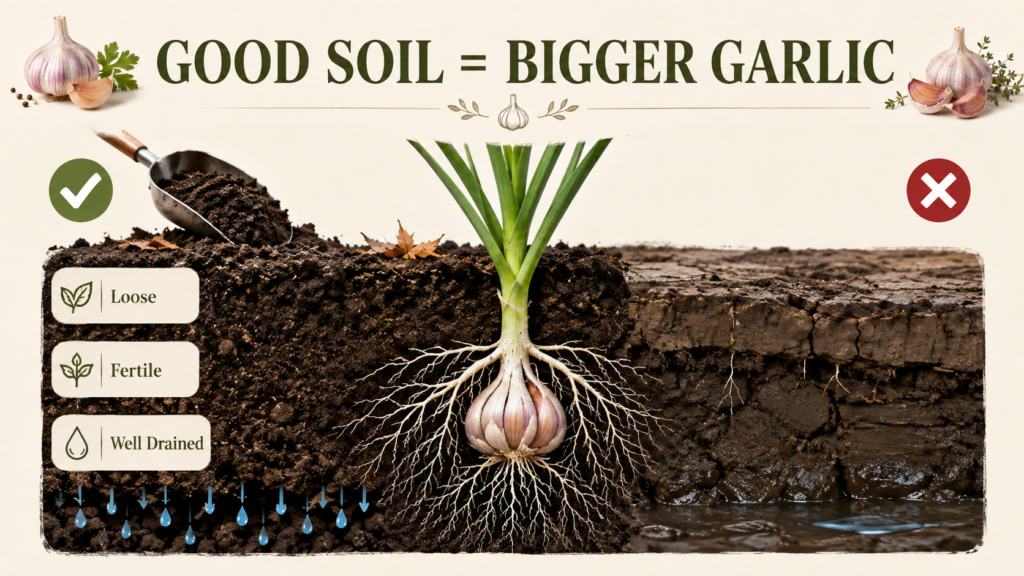
If your soil remains wet for long periods, a raised bed or improved drainage can be more valuable than adding more fertilizer. Garlic needs moisture during active growth, but it should never sit in saturated soil.
Simple soil goal: fertile enough to support leafy growth, loose enough for bulbs to expand, and free-draining enough to protect the cloves from rot.
How to Plant Garlic Step by Step

- Choose a healthy garlic bulb suited to your climate.
- Separate the bulb into individual cloves shortly before planting.
- Keep the papery skin on each clove and discard damaged, soft or moldy cloves.
- Use the larger healthy cloves for planting when possible.
- Place each clove with the pointed tip facing up and the flat basal/root end facing down.
- Plant at a locally appropriate depth, commonly a few inches deep depending on climate, soil and mulch.
- Space cloves about 4–6 inches (10–15 cm) apart, with enough room between rows to weed and work the bed.
- Cover with soil without compacting it heavily.
- Water after planting if the soil is dry, but do not saturate already-wet soil.
- Add mulch where it is useful for winter protection, moisture moderation or weed control.
Which Way Do You Plant a Garlic Clove?
Pointed end up. Flat root end down.
The pointed tip is where the shoot emerges. The flatter basal plate at the bottom is where the roots develop. Planting in the correct orientation makes the shoot’s path to the surface more direct and reduces unnecessary twisting underground.
How Deep Should Garlic Be Planted?
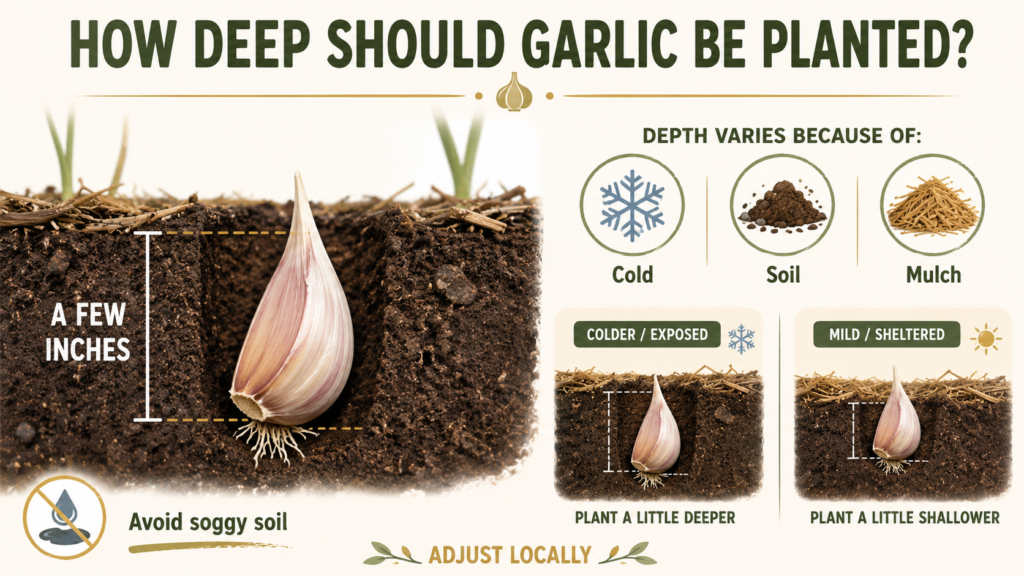
There is no single planting depth that is perfect in every region. Recommendations vary because winter temperature, soil texture and mulch all change how protected the clove needs to be. Many garden guides place garlic a few inches deep, while some milder-climate guidance uses shallower planting.
Use deeper protection in very cold or exposed conditions only when it matches local horticultural guidance. In dense, wet soil, overly deep planting can keep cloves wetter for longer, so drainage matters as much as depth.
How Far Apart Should You Plant Garlic?
A common home-garden spacing is about 4–6 inches (10–15 cm) between cloves. Wider spacing gives each plant more access to light, nutrients and soil volume, while overcrowding can reduce bulb size. Leave enough row space for weeding and airflow.
Should You Mulch Garlic?
Mulch is especially useful in cold climates because it buffers freeze-thaw cycles. It can also suppress weeds and reduce rapid moisture loss. Straw, shredded leaves or another clean, loose organic mulch can work when used appropriately.
In mild or very wet climates, heavy mulch can hold excess moisture, so adjust the amount to local conditions. In spring, check that a thick mat of mulch is not blocking shoots or keeping the soil excessively wet.
How Often Should You Water Garlic?
Garlic grows best with steady moisture during active leaf and bulb growth, but a fixed calendar is less useful than observing the soil and weather. Water deeply enough to moisten the root zone, then let the surface begin to dry rather than keeping the bed constantly soggy.
- Newly planted cloves: water if the soil is dry, but do not waterlogged the bed.
- Spring growth: keep moisture reasonably consistent during dry weather.
- Bulb expansion: avoid long droughts while leaves are actively growing.
- Approaching harvest: reduce or stop irrigation as bulbs mature and lower leaves begin to dry.
Too much late watering can keep wrappers wet and increase the risk of rot or poor storage quality.
How to Fertilize Garlic
Start with good soil rather than trying to rescue a poor bed with heavy feeding later. Compost before planting improves structure and fertility. Garlic benefits from adequate nitrogen during early active growth, especially in spring, but heavy late nitrogen can keep the plant focused on leaves when you want bulb development.
Where possible, use a soil test or locally recommended fertilizer rate rather than guessing. Avoid letting concentrated fertilizer touch newly planted cloves directly.
How to Care for Garlic in Spring
- Check that shoots can emerge through the mulch.
- Remove weeds before they compete strongly with the crop.
- Feed if your soil or local guidance indicates it is needed.
- Water during dry periods while leaves are actively growing.
- Watch hardneck plants for scapes.
- Inspect leaves for rust, unusual yellowing or other disease symptoms.
What Are Garlic Scapes?
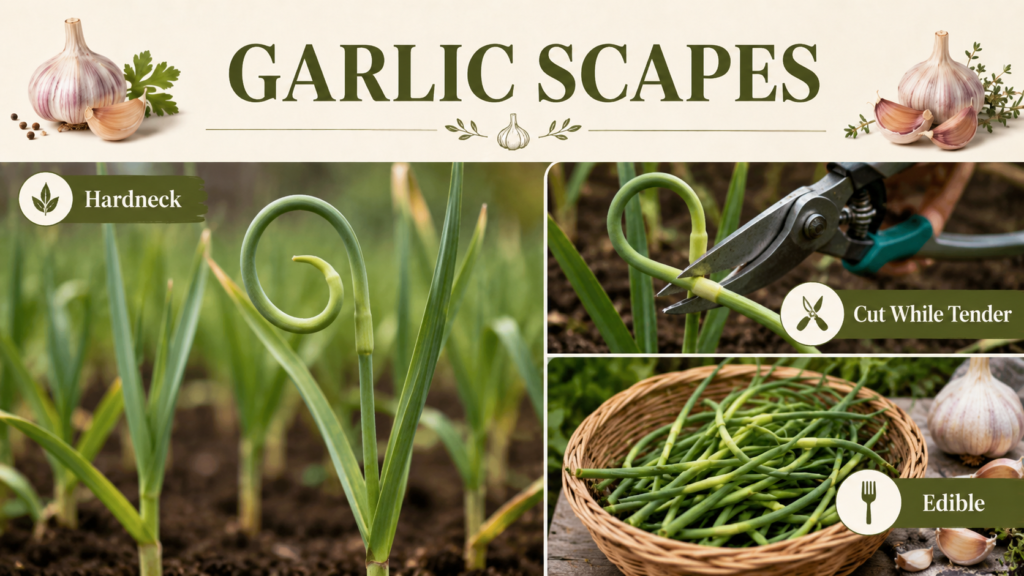
Hardneck garlic produces a firm, curling flower stalk called a scape. Many gardeners remove the scape while it is still tender so more of the plant’s energy remains available for bulb development. Scapes are edible and can be used like a mild garlic-flavored vegetable.
If your goal is bulb size, remove the scape before it becomes tough and fully mature. Softneck garlic usually does not produce the same obvious scape.
Can You Grow Garlic in Pots?
Yes. Garlic can grow well in containers if the pot is deep enough, drains freely and receives full sun. A container around 10 inches (25 cm) deep or deeper gives roots useful room, while the surface area determines how many cloves you can plant without crowding.
- Use drainage holes that cannot remain blocked.
- Use a loose, fertile container mix rather than dense garden soil.
- Keep roughly the same clove spacing you would use in a bed.
- Check moisture more often because containers dry faster than garden soil.
- Do not leave the pot standing in water.
What Happens After You Plant Garlic?
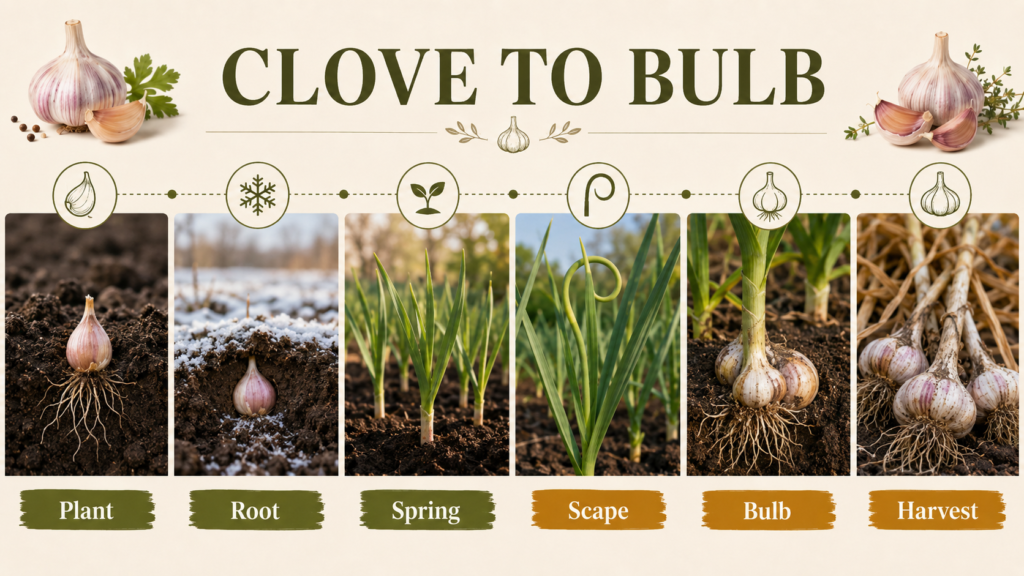
Garlic has a long growing cycle, especially when planted in fall. Understanding the sequence makes it easier to know whether the crop is progressing normally.
| Stage | What is happening |
| Planting | Clove is placed in soil and begins rooting |
| Cool season / winter | Roots continue developing; top growth may slow or pause |
| Spring | Strong leaf growth resumes |
| Scape stage | Hardneck garlic may produce a curling scape |
| Bulb formation | Energy moves into enlarging and dividing the underground bulb |
| Maturity | Lower leaves begin yellowing or browning |
| Harvest | Bulbs are lifted before wrappers deteriorate |
| Curing | Bulbs dry in a protected, airy place before storage |
How Do You Know When Garlic Is Ready to Harvest?
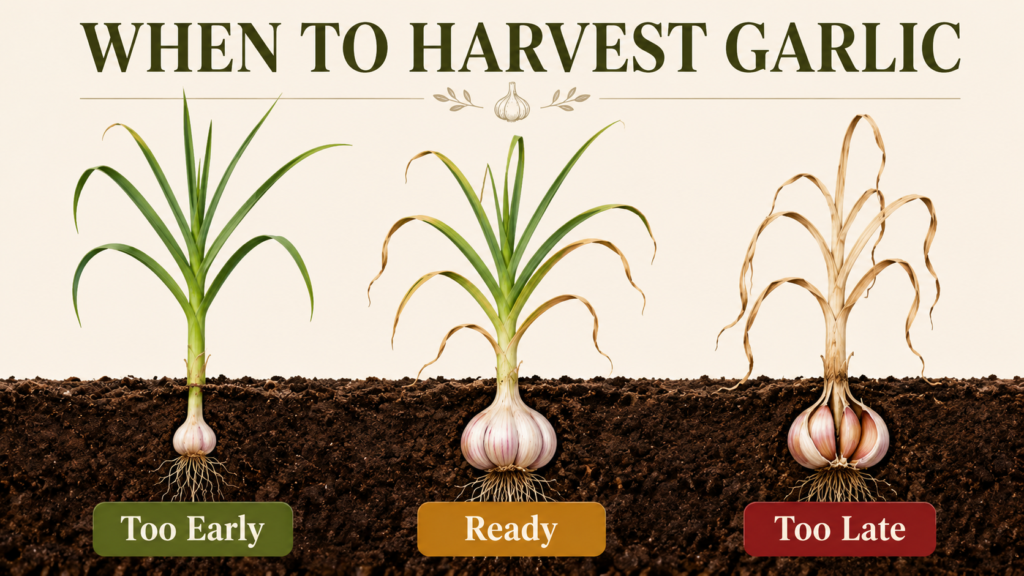
Harvest timing is important because bulbs lifted too early may be undersized, while bulbs left too long can split and lose protective wrappers. A common signal is that several lower leaves have yellowed or browned while some upper leaves remain green.
Do not wait for every leaf to disappear. Each healthy leaf contributes to the protective wrapper layers around the bulb, so a bulb harvested after all foliage has completely collapsed may store less well.
How to Harvest Garlic Without Damaging It
- Stop or reduce watering as maturity approaches and the soil begins to dry.
- Loosen the soil beside the bulb with a fork or spade rather than stabbing directly underneath it.
- Lift the bulb gently from below instead of yanking hard on the stem.
- Brush off loose soil, but avoid washing bulbs that are intended for curing and storage unless local post-harvest guidance requires it.
- Keep the stem and roots attached during the initial curing period.
How to Cure Garlic
Curing dries the outer wrappers, neck and roots so garlic stores better. Lay or hang freshly harvested bulbs in a dry, shaded or protected place with strong airflow. Keep them out of rain and avoid baking them in intense direct sun.
Curing often takes several weeks, depending on humidity, airflow and bulb size. When the wrappers feel papery and the necks are dry, trim roots and stems as appropriate for the type of garlic and your storage method.
How to Store Garlic
Store fully cured garlic in a cool, dry, well-ventilated place. Mesh bags, baskets or braided softneck stems allow air to circulate. Avoid sealed plastic bags that trap moisture.
Softneck garlic generally stores longer than hardneck garlic. Check stored bulbs periodically and remove any that soften, mold or begin to decay.
Why Is My Garlic Not Growing Properly?
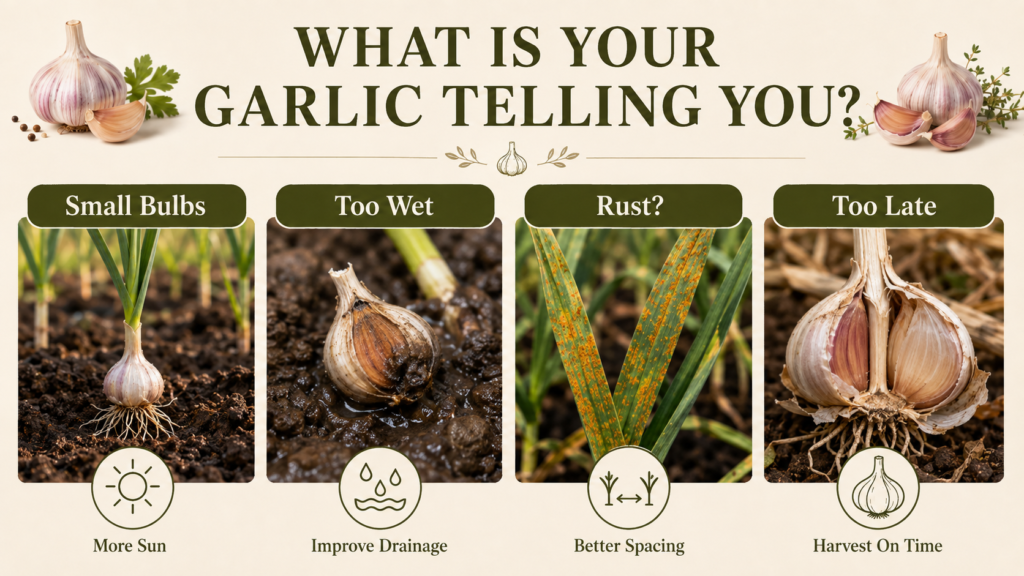
| Problem | Possible cause | What to check first |
| Small bulbs | Crowding, low fertility, poor sun or late planting | Spacing, soil fertility, light and planting date |
| One large round bulb | Insufficient cold exposure or late planting | Variety, planting time and winter conditions |
| Rotting cloves | Waterlogged or poorly drained soil | Drainage and irrigation |
| Weak pale growth | Low fertility, competition or stress | Soil, weeds and moisture |
| Bulbs splitting open | Harvested too late | Leaf stage and harvest timing |
| Leaves yellowing too early | Stress, excess moisture, nutrient issue or disease | Soil moisture, roots and leaf symptoms |
| Rust-colored spots on leaves | Possible garlic rust | Leaf symptoms and local disease guidance |
Common Garlic Pests and Diseases
The exact pest and disease pressure varies by region, so local extension or horticultural guidance is valuable. Problems frequently discussed in garlic-growing guides include white rot, garlic rust, onion fly and allium leaf miner. Prevention usually starts with clean planting stock, crop rotation, good airflow and avoiding chronically wet soil.
If a disease is suspected, identify it before composting infected material or replanting garlic in the same soil. Some soil-borne allium diseases can persist for years.
10 Common Garlic Growing Mistakes
- Planting unhealthy or diseased cloves.
- Planting the clove upside down.
- Using a planting date that does not fit the local climate.
- Growing garlic in a shaded location.
- Planting in soil that stays waterlogged.
- Crowding cloves too closely together.
- Allowing weeds to compete through spring growth.
- Overfeeding with nitrogen late in the season.
- Continuing heavy watering as harvest approaches.
- Waiting so long to harvest that bulbs split and wrappers deteriorate.
Frequently Asked Questions
When is the best time to plant garlic?
Fall is the main planting season in many climates because garlic benefits from rooting before winter and from a period of cold. Exact timing varies by region.
Can I plant garlic in spring?
Yes. Plant as early as practical. Spring-planted garlic can produce a crop, although bulbs may be smaller if the plant has less time or cold exposure.
Can I plant garlic from the grocery store?
It may grow, but seed garlic or locally adapted planting stock is more predictable and can reduce climate and disease concerns.
Which end of garlic goes up?
Plant the pointed tip up and the flat basal or root end down.
How deep do you plant garlic?
Garlic is commonly planted a few inches deep, but exact depth varies with climate, soil and mulch. Follow local horticultural guidance for very cold or very wet conditions.
The Bottom Line
Successful garlic starts with healthy cloves, the right planting season, full sun and free-draining soil. Plant each clove pointed-end up, give it enough space, maintain moisture during active growth, and ease off watering as the crop matures. For hardneck garlic, manage the scapes; for all garlic, harvest before the bulbs split and cure them with plenty of airflow before storage.