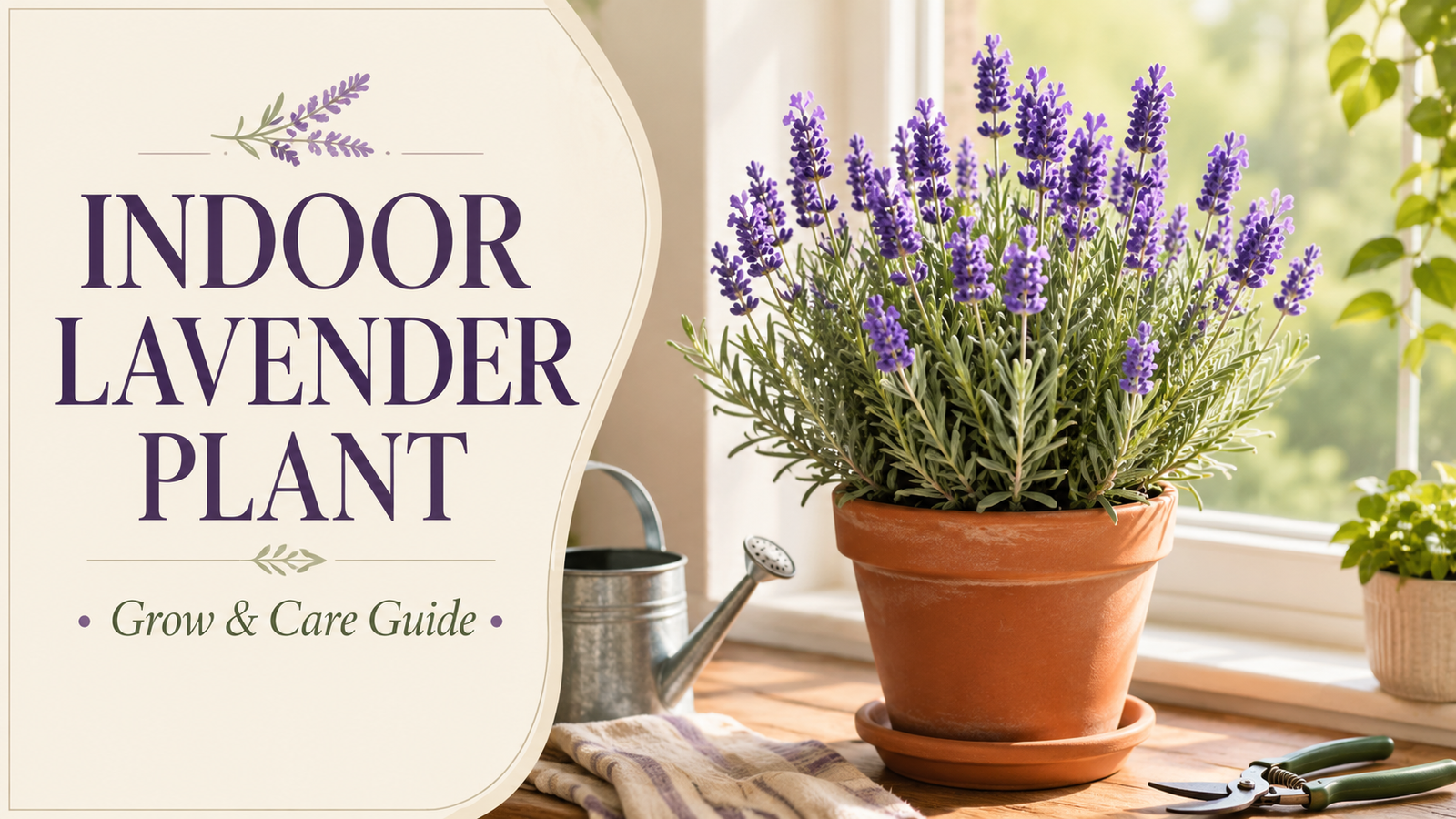

Lavender can grow indoors, but it is not a typical low-maintenance houseplant.
It naturally prefers bright sun, fast-draining soil and relatively dry conditions, so indoor success depends on recreating those conditions as closely as possible. Give an indoor lavender plant strong direct light, a container that drains freely, careful watering and good air movement, and it can stay compact, fragrant and healthy.
This guide explains how to grow lavender indoors from the moment you bring a plant home, including where to place it, what kind of pot to use, how often to water it, how to encourage flowering and how to diagnose yellow, brown, drooping or leggy growth.
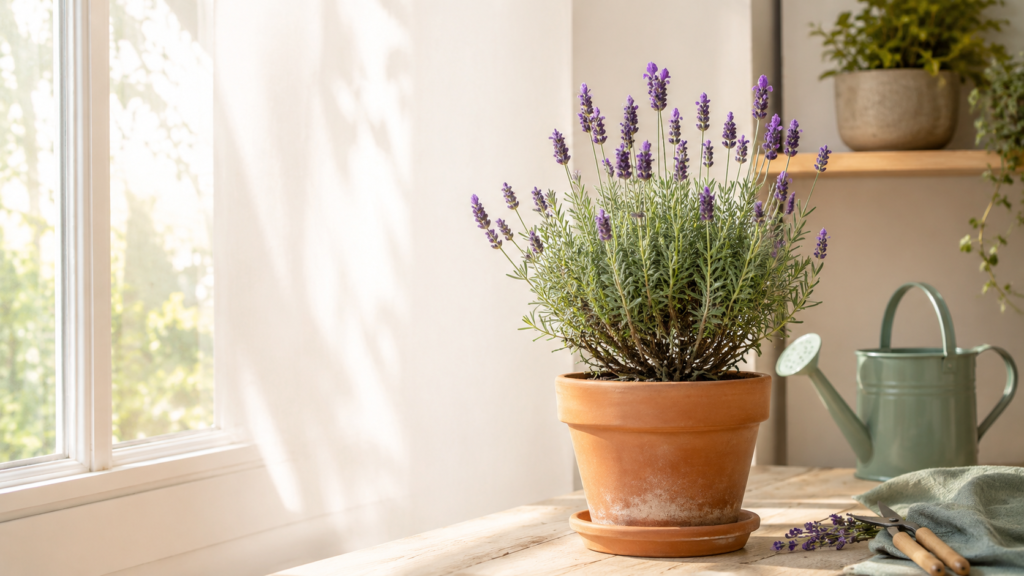
Can Lavender Grow Indoors?
Quick answer:
Yes. Lavender can grow indoors when it receives plenty of strong light, has excellent drainage and is not kept constantly wet.
The important caveat is that lavender is naturally better suited to sunny outdoor conditions than to the average room. A bright-looking room may still be much darker than an outdoor growing site. That is why indoor lavender often becomes stretched, pale or reluctant to flower when it is placed too far from a sunny window.
Treat lavender as a sun-loving Mediterranean-style container plant rather than as a shade-tolerant tropical houseplant. If your home cannot provide enough natural light, a suitable grow light can help.
Indoor Lavender Care at a Glance
| Care factor | What indoor lavender prefers |
| Light | Very bright light with several hours of direct sun where possible |
| Best position | Close to the brightest suitable window, often south-facing |
| Water | Water thoroughly, then allow the mix to dry significantly before watering again |
| Soil | Loose, fast-draining potting mix |
| Pot | A container with unobstructed drainage holes; avoid dramatically oversized pots |
| Humidity | Low to moderate; avoid constantly damp, stagnant conditions |
| Airflow | Good air movement around the foliage |
| Feeding | Light feeding only; lavender does not need rich soil |
| Pruning | Trim after flowering and avoid cutting hard into old woody stems |
| Indoor difficulty | Moderate — light and overwatering are the main challenges |
Best Lavender Varieties for Growing Indoors

Compact lavender varieties are usually easier to manage indoors because they fit containers and windowside spaces more comfortably. English lavender (Lavandula angustifolia) includes several compact cultivars commonly grown in pots.
- ‘Munstead’ — compact, aromatic and widely available.
- ‘Hidcote’ — valued for deep purple flowers and a relatively compact habit.
- ‘Little Lottie’ — a smaller cultivar suited to containers and limited space.
- Other dwarf or compact cultivars — often a better indoor choice than very large lavenders.
The exact cultivar matters less than the growing conditions. Even a compact lavender will struggle if it is kept in low light or waterlogged potting mix.
Where Should You Put an Indoor Lavender Plant?

Place indoor lavender as close as practical to your brightest window. In many homes, a south-facing exposure provides the strongest natural light, while a bright west-facing window can also work. The farther a plant sits from the glass, the less useful light it receives.
How Much Sun Does Lavender Need Indoors?
Aim for several hours of direct sunlight and very bright conditions for the rest of the day. More light usually means denser growth and a better chance of flowering. Rotate the pot periodically so one side does not permanently lean toward the window.
Signs that an indoor lavender plant may need more light include:
- Long, thin or widely spaced stems
- Pale or weak new growth
- The plant leaning strongly toward the window
- Reduced flowering
- Loss of the compact, mounded shape
Can You Use a Grow Light for Lavender?
Yes. A grow light is useful when winter days are short or your windows do not provide enough direct sun. Use a light designed for plant growth and follow the manufacturer’s recommended hanging distance and daily operating period. The goal is to supplement weak natural light, not simply illuminate the room.
What Kind of Indoor Pot Should I Plant Lavender In?
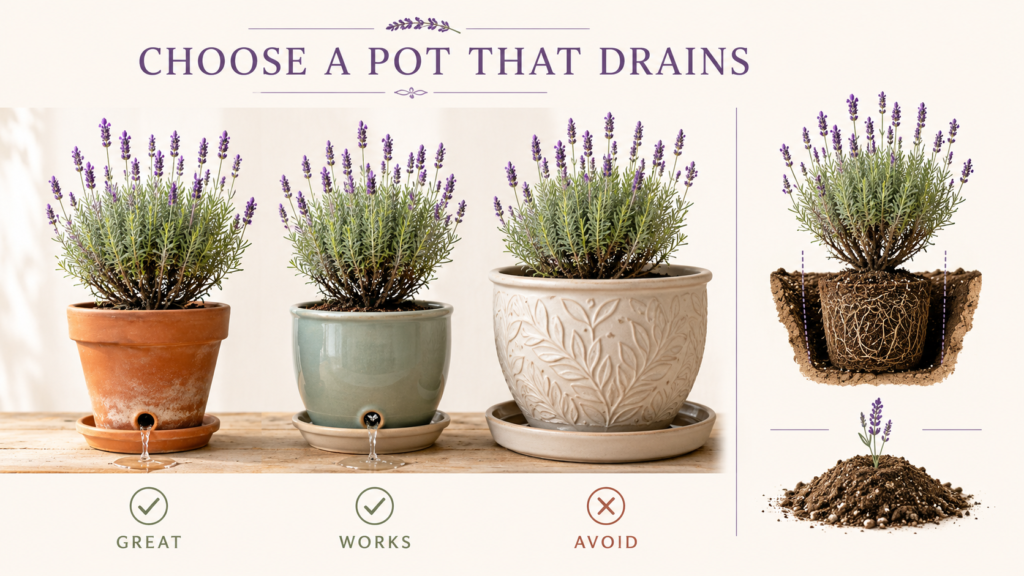
The best indoor pot for lavender is one that drains quickly. Drainage holes are essential because excess water must be able to leave the root zone. Terracotta is a popular choice because its porous walls allow moisture to evaporate more readily, but plastic and glazed pots can also work when watering is carefully managed.
Avoid jumping from a small nursery pot to a huge decorative planter. An oversized container holds a larger volume of wet mix around a relatively small root system, which can keep the roots damp for too long.
A good lavender pot should have:
- At least one large, unobstructed drainage hole
- Enough room for the root ball without excessive unused soil
- A saucer that can be emptied after watering
- No standing water trapped inside a decorative cachepot
Best Soil for Indoor Lavender
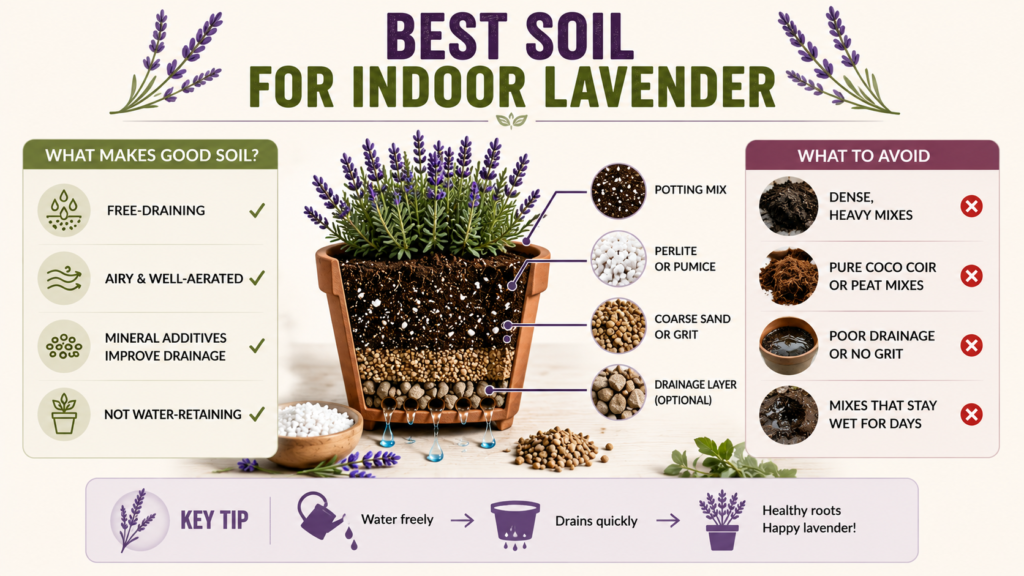
Lavender roots need oxygen as much as they need water. Use a loose, free-draining potting mix that does not stay saturated for long periods. Coarse grit or other drainage-promoting mineral amendments can be mixed into container compost to improve drainage. Avoid dense mixes that remain wet for days.
The goal is simple: water should move through the pot easily, while the root zone should regain air as the mix dries.
How to Plant Lavender in a Pot
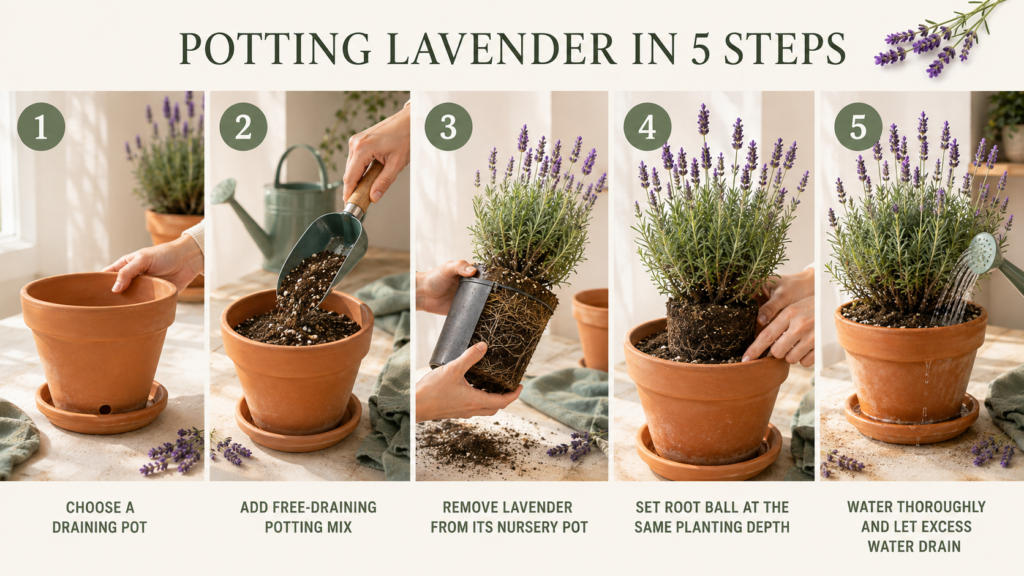
- Choose a container with reliable drainage and only a modest increase in size compared with the existing root ball.
- Prepare a free-draining potting mix.
- Remove the lavender gently from its nursery container and inspect the roots.
- Set the plant so the top of the root ball sits at about the same level it was growing before.
- Fill around the root ball without burying the crown or packing the mix excessively.
- Water thoroughly after potting and allow all excess water to drain away.
- Empty the saucer or decorative outer pot, then move the plant to its brightest suitable location.
How Often Should You Water Indoor Lavender?
Do not water indoor lavender by the calendar. Check the potting mix first and water according to how quickly it dries.
When the mix has dried significantly, water thoroughly so the entire root ball is moistened and excess water runs from the drainage holes. Then allow the pot to drain completely. Lavender is far more likely to suffer in persistently wet soil than from missing a rigid weekly watering date.
Watering frequency changes with:
- The amount of sunlight the plant receives
- Room temperature
- Season and day length
- Pot size and material
- Plant size and root development
- How quickly the potting mix drains
How to Tell When Lavender Needs Water
Feel the potting mix below the surface rather than judging only by appearance. You can also learn the weight of the pot: a dry container often feels noticeably lighter than a freshly watered one. If the mix is still cool and damp, wait and check again later.

Signs of Overwatered Lavender
- Yellowing leaves
- Drooping while the soil is still wet
- A potting mix that stays damp for many days
- Soft or declining growth
- A sour smell or damaged roots in severe cases
A drooping plant is not automatically thirsty. If lavender is wilted but the soil is wet, adding more water can make the problem worse.
Signs Lavender Is Too Dry
- Very dry potting mix throughout the root zone
- A noticeably light pot
- Crisp or brittle foliage
- Wilting accompanied by genuinely dry soil
Temperature, Humidity and Air Circulation
Lavender generally prefers drier conditions than many tropical houseplants. Avoid constantly humid, stagnant positions and keep the plant away from situations where foliage stays damp for long periods. Normal household air movement is useful, but do not place the plant directly in the blast of a heating or air-conditioning vent.
Give the foliage space rather than crowding the pot tightly between other plants. Good airflow and fast drainage work together to reduce the length of time the plant remains wet after watering.
Should You Fertilize Indoor Lavender?
Lavender naturally performs well in relatively lean conditions and does not need heavy feeding. Excess fertilizer, especially high-nitrogen feeding, can encourage soft leafy growth rather than the compact habit and flowering you want. If you feed container-grown lavender, use a light hand and avoid treating it like a hungry tropical flowering plant.
How to Prune an Indoor Lavender Plant
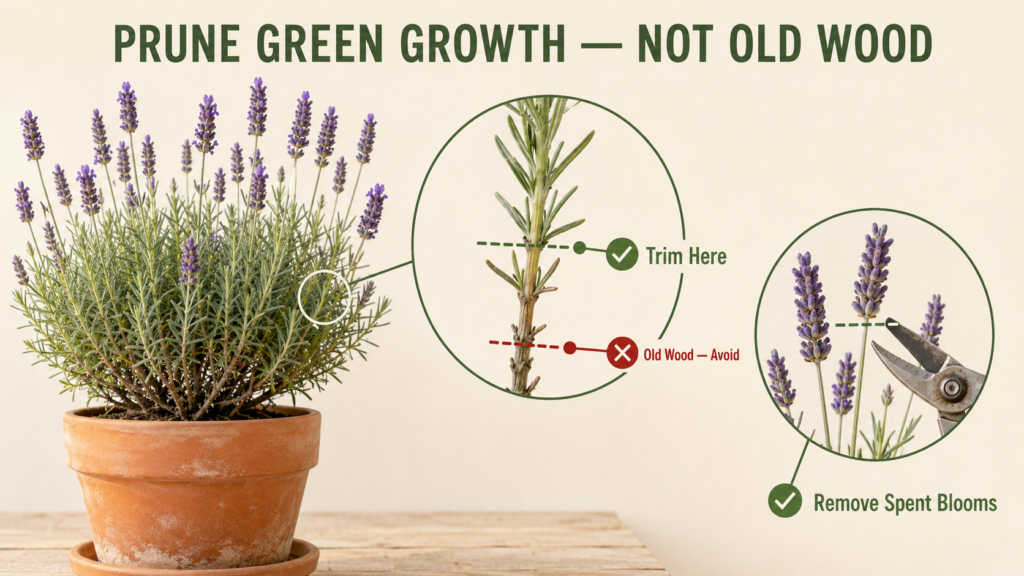
Light pruning helps indoor lavender stay neat and compact. Remove spent flower stalks and trim green growth after flowering to maintain shape. Avoid cutting hard into old bare woody stems because lavender may not readily produce new growth from old wood.
If the plant becomes leggy indoors, correct the light problem as well as pruning. Cutting back a low-light plant without improving its light simply produces another cycle of weak growth.
When and How to Repot Lavender
Repot when the root system has clearly filled the container, the potting mix has become compacted, or drainage has deteriorated. Move up gradually rather than choosing a dramatically larger pot. Refresh the free-draining mix and keep the plant at the same planting depth.
Can Indoor Lavender Flower?
Yes, lavender can flower indoors, but flowering is strongly influenced by light. A plant may remain alive in a bright room yet produce fewer flower spikes than the same plant outdoors in full sun.
If your lavender is healthy but not flowering, check:
- Whether it receives enough direct light
- Whether it has become stretched or leggy
- Whether it is being fed too heavily
- Whether the plant is in an active flowering season
- Whether overall root and drainage conditions are healthy
Should Indoor Lavender Go Outside in Summer?
When weather and climate are suitable, outdoor light and airflow can benefit potted lavender. However, a plant that has spent months indoors should be acclimated gradually. Start with gentler outdoor conditions and increase exposure over several days rather than moving it immediately from indoor light to intense midday sun.
Why Is My Indoor Lavender Plant Dying?
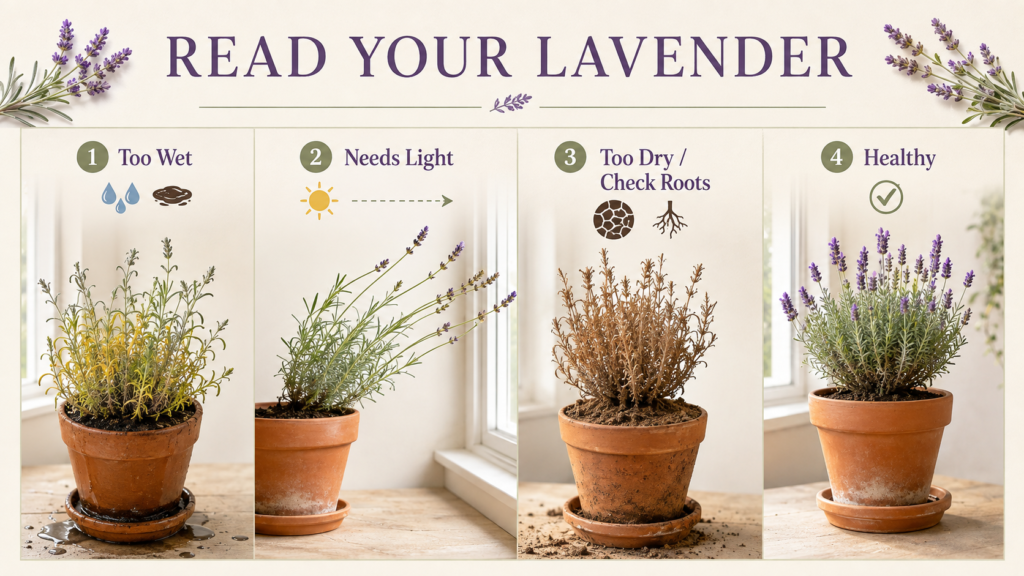
Indoor lavender problems usually trace back to light, water or drainage. Use the symptoms below as a starting point, then check the soil and growing conditions before taking action.
| Symptom | Likely cause | What to check first |
| Yellow leaves | Too much moisture or stressed roots | How long the soil stays wet and whether the pot drains freely |
| Drooping with wet soil | Root stress from excess moisture | Drainage holes, saucer water and root condition |
| Long, weak stems | Insufficient light | Distance from the window and hours of direct sun |
| Few or no flowers | Often inadequate light or overly lush growth | Light level and feeding |
| Brown, crisp foliage | Drought stress or root damage | Actual moisture level throughout the root ball |
| Growth leaning one way | One-sided light | Rotate the pot and improve overall exposure |
| Soil wet for many days | Oversized pot or slow-draining mix | Container size and potting mix structure |
Indoor Lavender Tree Care
A product sold as a “lavender tree” is usually lavender trained into a standard or topiary form with a clear woody stem and rounded crown; it is not a separate tree species. Its basic needs remain the same: very bright light, fast drainage, careful watering and good airflow.
Because the rounded canopy is part of the appeal, light trimming is useful for maintaining shape. Rotate the plant for even exposure and avoid letting the decorative outer pot hold drainage water.
Indoor vs. Outdoor Lavender

| Factor | Indoor lavender | Outdoor lavender |
| Light | Harder to provide in sufficient intensity | Usually easier in full sun |
| Airflow | Often limited | Naturally stronger |
| Soil drying | Can be slower | Often faster, depending on weather |
| Flowering | May be reduced | Usually stronger in suitable conditions |
| Main risk | Low light plus wet roots | Poor drainage or unsuitable weather |
| Watering | Requires close observation of the pot | Affected strongly by rain, heat and soil |
8 Common Indoor Lavender Mistakes
1. Treating lavender like a low-light houseplant.
2. Watering on the same day every week without checking the soil.
3. Using a pot with poor or blocked drainage.
4. Leaving runoff sitting inside a saucer or decorative cachepot.
5. Using dense potting mix that stays wet for too long.
6. Moving a small root ball into a very large container.
7. Overfeeding in an attempt to force faster growth or more flowers.
8. Pruning aggressively into old woody stems without addressing the plant’s growing conditions.
Frequently Asked Questions
Can lavender grow indoors year-round?
It can, provided you can maintain enough light and appropriate watering through seasonal changes. Winter is often the hardest period because indoor light levels fall.
Is lavender a good houseplant?
Lavender can be grown as a houseplant, but it is less forgiving than many common indoor plants. Strong light and drainage are essential.
How often should I water indoor lavender?
Water according to soil moisture rather than a fixed schedule. Let the mix dry significantly, then water thoroughly and allow all excess water to drain.
What is the best pot for lavender indoors?
Use a pot with reliable drainage that is only moderately larger than the root ball. Terracotta is useful because it dries more readily, although other materials can work.
Does lavender need direct sunlight indoors?
Strong direct light is highly beneficial. A bright south-facing window is often the best natural-light position in the home.
The Bottom Line
A healthy indoor lavender plant depends on four things more than anything else: strong light, fast drainage, restrained watering and good airflow. Choose a compact plant, keep it close to a sunny window, use a pot that drains freely and let the potting mix dry between waterings. If your lavender starts to yellow, droop, stretch or stop flowering, check those four conditions before reaching for fertilizer or adding more water.