
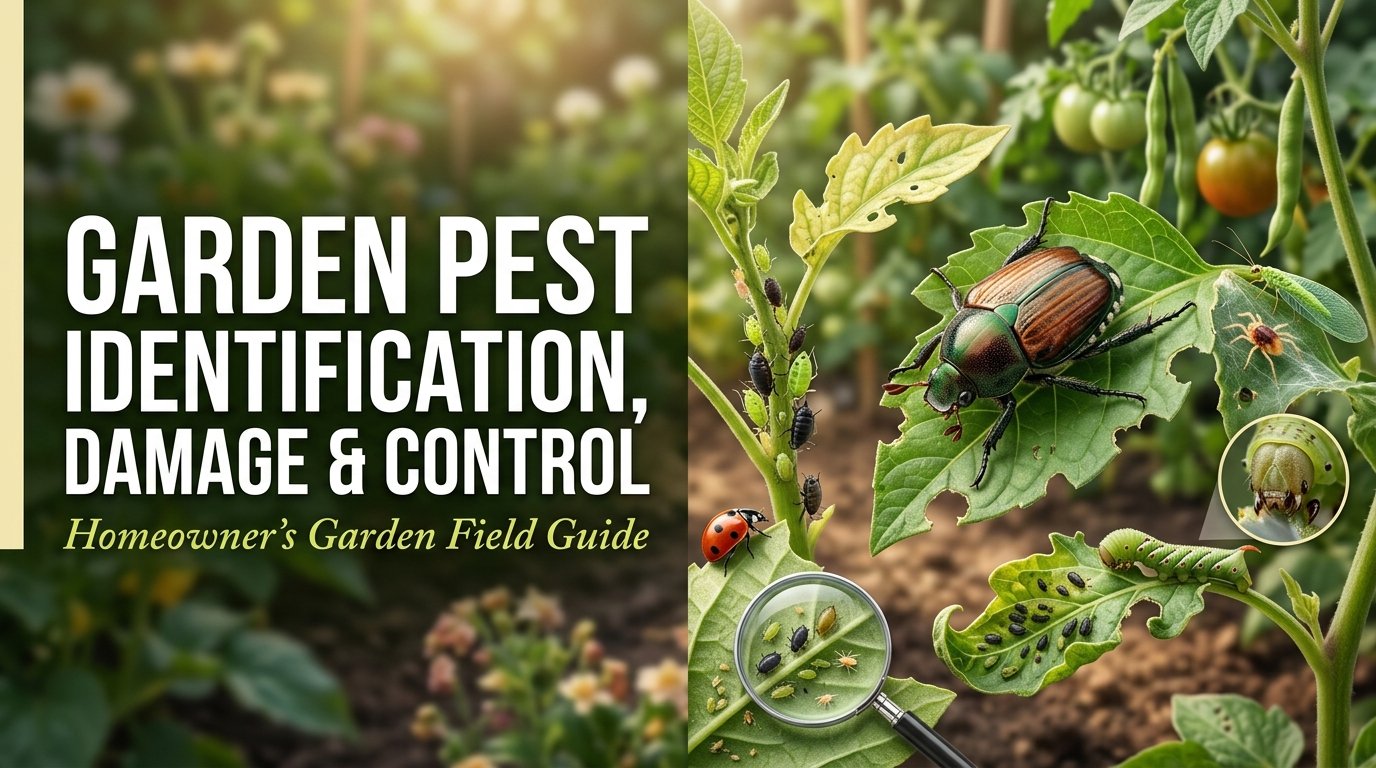

Learn how to identify common garden pests by the damage they leave behind, where they hide, and the safest practical steps to protect vegetables, flowers, herbs, shrubs, and fruiting plants.
list of Garden pests
 Ants Avg Size: 0.08–1 in Lifespan: Few weeks to years Attracts: Sugar, crumbs, moisture Prevention: Keep surfaces clean, seal cracks |  Aphids Avg Size: 1/16–1/8 in Lifespan: 1 month Attracts: New plant growth, high nitrogen Prevention: Inspect plants, use neem oil |  Armyworms Avg Size: 1.5 in Lifespan: 30–90 days Attracts: Lush green grass, crops Prevention: Maintain lawn health, remove weeds |
 Asian Lady Beetle Avg Size: 1/4 in Lifespan: 1–3 years Attracts: Light-colored walls, sunny spots Prevention: Seal window gaps and vents |  Bagworms Avg Size: 1–2 in Lifespan: 1 year Attracts: Juniper, cedar, arborvitae Prevention: Hand-pick bags in winter |  Billbugs Avg Size: 1/4–1/2 in Lifespan: 1 year Attracts: Turfgrass, thatch Prevention: Core aeration, proper irrigation |
 Black Flies Avg Size: 5–15 mm Lifespan: 4–6 weeks Attracts: CO2, sweat, dark clothing Prevention: Wear light colors, use repellent |  Blister Beetles Avg Size: 0.4–1 in Lifespan: 3 months Attracts: Alfalfa, garden vegetables Prevention: Control grasshopper populations |  Boxelder Bugs Avg Size: 1/2 in Lifespan: 1 year Attracts: Female boxelder trees, sun Prevention: Seal exterior cracks, use soap spray |
 Cabbage Worms Avg Size: 1 in Lifespan: 3 weeks Attracts: Kale, cabbage, broccoli Prevention: Use row covers, remove debris |  Carpenter Ants Avg Size: 1/2–5/8 in Lifespan: Up to 10 years (Queen) Attracts: Damp wood, honeydew Prevention: Repair leaks, remove wet wood | 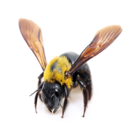 Carpenter Bees Avg Size: 1/2–1 in Lifespan: 1 year Attracts: Unpainted softwoods Prevention: Paint or varnish wood surfaces |
 Centipedes Avg Size: 1–6 in Lifespan: 1–6 years Attracts: High humidity, other insects Prevention: Reduce moisture, seal entry points | 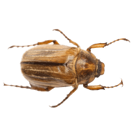 Chafer Beetles Avg Size: 1/2 in Lifespan: 1 year Attracts: Turfgrass roots, porch lights Prevention: Keep lawn tall and thick | 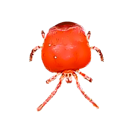 Chiggers Avg Size: 1/150 in Lifespan: 2 months Attracts: Tall grass, berry patches Prevention: Keep grass short, wear long pants |
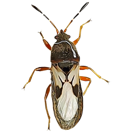 Chinch Bugs Avg Size: 1/5 in Lifespan: 2 months Attracts: Sunny, dry turf areas Prevention: Regular watering, dethatching | 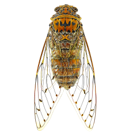 Cicadas Avg Size: 1–2 in Lifespan: 2–17 years Attracts: Deciduous trees and shrubs Prevention: Wrap young trees in netting | 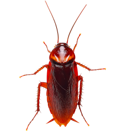 Cockroaches Avg Size: 0.5–2 in Lifespan: 6–12 months Attracts: Food waste, water, clutter Prevention: Store food in bins, fix leaks |
 Potato Beetles Avg Size: 3/8 in Lifespan: 1 year Attracts: Potatoes, tomatoes, eggplant Prevention: Crop rotation, hand-picking | 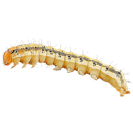 Corn Earworms Avg Size: 1.5 in Lifespan: 30 days Attracts: Corn silk, beans, tomatoes Prevention: Early planting, mineral oil on silk |  Crane Flies Avg Size: 1 in Lifespan: 10–15 days Attracts: Wet soil, porch lights Prevention: Improve lawn drainage |
 Crickets Avg Size: 1 in Lifespan: 3 months Attracts: Warmth, bright lights, paper Prevention: Change yellow outdoor bulbs | 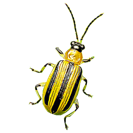 Cucumber Beetles Avg Size: 1/4 in Lifespan: 8 weeks Attracts: Cucurbits, squash blossoms Prevention: Mulch heavily, use trap crops | 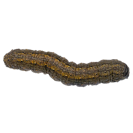 Cutworms Avg Size: 1–2 in Lifespan: 1 year Attracts: Weedy gardens, early seedlings Prevention: Use cardboard collars on stems |
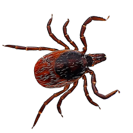 Deer Ticks Avg Size: 1/8 in Lifespan: 2 years Attracts: Deer, tall grass, leaf litter Prevention: Clear brush, use tick repellent | 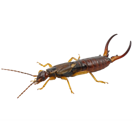 Earwigs Avg Size: 5/8 in Lifespan: 1 year Attracts: Cool, moist hiding spots Prevention: Remove mulch near foundation | 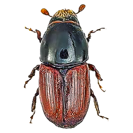 Elm Bark Beetles Avg Size: 1/8 in Lifespan: 1 year Attracts: Weak or dying elm trees Prevention: Prune and remove dead elm wood |
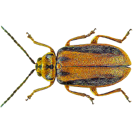 Elm Leaf Beetles Avg Size: 1/4 in Lifespan: 1 year Attracts: Elm tree foliage Prevention: Band trees with insecticide | 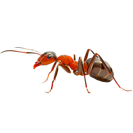 Fire Ants Avg Size: 1/16–1/4 in Lifespan: 1–6 months Attracts: Open, sunny areas, oily foods Prevention: Mound bait treatments | 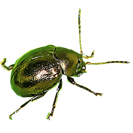 Flea Beetles Avg Size: 1/10 in Lifespan: 2 months Attracts: Early spring garden crops Prevention: Use yellow sticky traps |
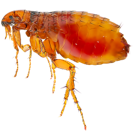 Fleas Avg Size: 1.5–3 mm Lifespan: 2–3 months Attracts: Pets, body heat, vibrations Prevention: Treat pets, vacuum regularly | 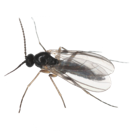 Fungus Gnats Avg Size: 1/8 in Lifespan: 1 week Attracts: Overwatered soil, decay Prevention: Allow soil to dry between watering | 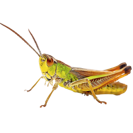 Grasshoppers Avg Size: 1–2 in Lifespan: 1 year Attracts: Green vegetation, weeds Prevention: Till soil to destroy egg pods |
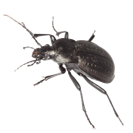 Ground Beetles Avg Size: 1/2–1 in Lifespan: 2–3 years Attracts: Under logs, stones, night lights Prevention: (Beneficial) Avoid broad chemicals | 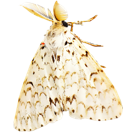 Gypsy Moths Avg Size: 1.5 in (Wings) Lifespan: 1 year Attracts: Oak, birch, apple trees Prevention: Scrape egg masses into soapy water |  Inchworms Avg Size: 1 in Lifespan: 1 year Attracts: Fruit and shade trees Prevention: Apply sticky bands to tree trunks |
Chewed leaves, sticky stems, silver-speckled foliage, collapsed seedlings, or fruit covered in scars can all point to a pest problem – but the insect you first notice is not always the insect causing the damage. Good garden pest identification starts by matching three clues: what the damage looks like, which part of the plant is affected, and what is living on or around the plant.
That matters because many garden visitors are harmless or beneficial. A fast black ground beetle under a pot may be hunting slugs and caterpillars, while a lady beetle larva can look alarming even though it is feeding on aphids. Treating before you know what you are looking at can remove natural enemies and make the real pest problem harder to manage.
Quick Garden Pest Identification by Damage
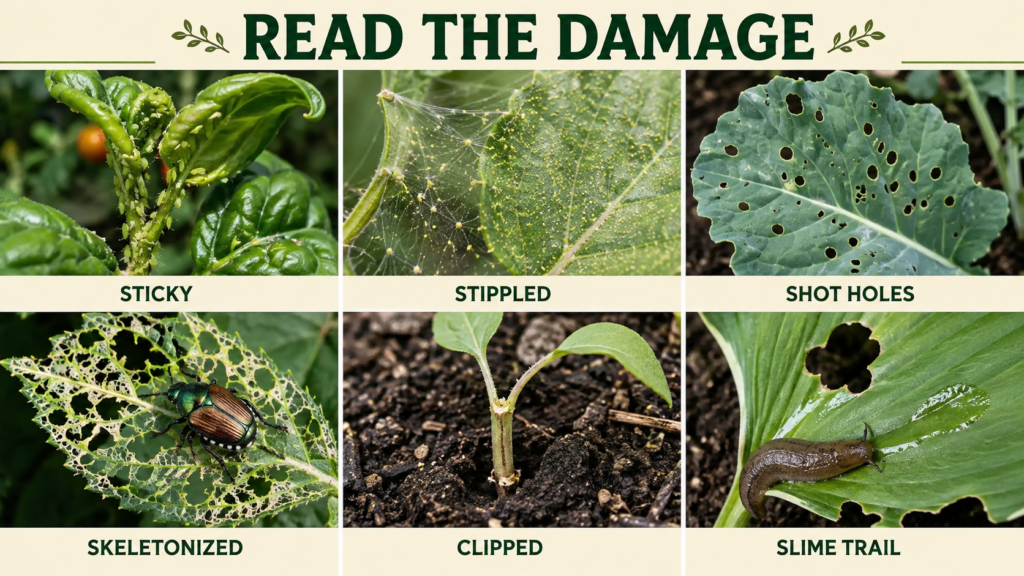
When the pest is hidden, damage is often the fastest route to a correct identification. Use the symptom as your starting point, then inspect the suggested location before taking action.
| Damage or clue | Likely pests | Where to inspect |
| Leaves curled, puckered, sticky or covered with sooty mold | Aphids, whiteflies, scale, mealybugs | Tender shoots, stems and leaf undersides |
| Fine pale stippling, bronzing or webbing | Spider mites | Undersides of leaves; tap foliage over white paper |
| Silvery streaks or scarring with tiny dark specks | Thrips | Flowers, buds, folded leaves and leaf veins |
| Many tiny round holes or “shot holes” | Flea beetles | Young leaves and seedlings; watch for jumping beetles |
| Skeletonized leaves | Japanese beetles and other leaf-feeding beetles | Upper foliage, flowers and sunny plant surfaces |
| Large irregular holes with green droppings | Cabbage worms, loopers, hornworms | Leaf undersides, stems and inner canopy |
| Seedlings clipped at the soil line | Cutworms | Soil and debris within 12 inches of the damaged plant |
| Winding pale tunnels inside leaves | Leaf miners | Inside the leaf tissue; look for serpentine mines |
| Yellowing or sudden wilting on squash-family plants | Squash bugs | Leaf undersides, crowns and plant bases |
| Dimpled, corky or distorted fruit | Stink bugs and other piercing-sucking bugs | Fruit clusters, weeds and leaf undersides |
| Ragged holes plus shiny slime trails | Slugs and snails | Under boards, pots, mulch and foliage after dark |
| Plants wilt even when soil is moist; roots look pruned | White grubs or root-feeding larvae | Root zone and surrounding soil |
How to Inspect a Plant Before You Treat It
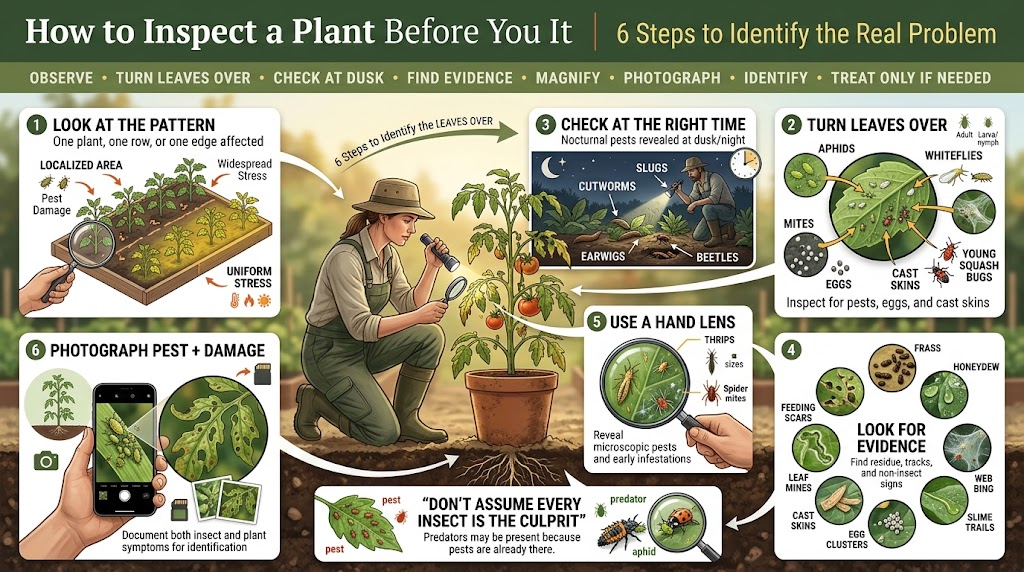
A five-minute inspection can prevent weeks of unnecessary spraying. Instead of looking only at the top of the plant, work from the newest damage outward and compare damaged tissue with healthy tissue.
1. Look at the pattern. Is one plant affected, one row, the garden edge, or many unrelated plants? A localized cluster can point to a pest, while widespread yellowing may also suggest watering, nutrient, or weather stress.
2. Turn leaves over. Aphids, whiteflies, mites, eggs, and young squash bugs often stay on protected leaf undersides.
3. Check at the right time. Slugs, cutworms, earwigs, and some beetles are easier to find at dusk or after dark. A flashlight inspection can reveal what daytime scouting misses.
4. Look for evidence, not just insects. Frass (droppings), honeydew, webbing, slime trails, egg clusters, cast skins, mines, and feeding scars can be more diagnostic than a single insect.
5. Use a hand lens when needed. Thrips and spider mites may be too small to identify confidently with the naked eye.
6. Photograph the pest and damage together. A clear close-up plus a whole-plant photo makes expert identification easier if you need help from a local extension service or nursery professional.
| IMPORTANT Do not assume every insect on a damaged plant is the culprit. Predatory insects often arrive because the pest is already there. |
Common Sap-Sucking and Cell-Feeding Pests
These pests remove plant fluids or scrape cells rather than chewing large holes. Their damage often shows up as curling, yellowing, silvering, stippling, sticky honeydew, or distorted new growth.
How to identify: Tiny, soft-bodied, pear-shaped insects that cluster on tender stems, buds, and leaf undersides. They may be green, black, yellow, pink, gray, or reddish. Many are wingless, although winged forms can appear when colonies become crowded.
Typical damage: New leaves curl or pucker, shoots become stunted, and sticky honeydew may coat foliage. Black sooty mold often develops on the honeydew. Ant activity can be a clue because some ants feed on honeydew and protect aphid colonies.
Where to look: Check soft new growth first, then unfold curled leaves and inspect the undersides. Roses, beans, peppers, tomatoes, brassicas, herbs, and many ornamentals can host aphids.
Damage control: For light infestations, dislodge colonies with a firm stream of water or prune heavily infested tips. Encourage lady beetles, lacewings, and parasitoid wasps. If pressure remains high, insecticidal soap or horticultural oil can work when applied thoroughly to the pests; follow the product label and avoid spraying heat-stressed plants.
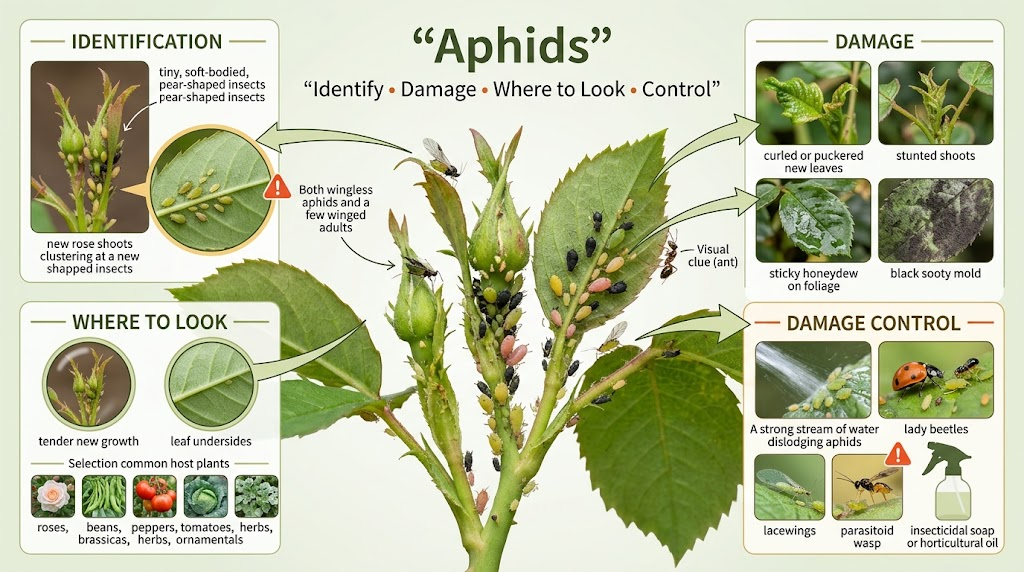
| QUICK ID TIP If you see sticky leaves plus ants, look for aphids or another honeydew-producing pest before treating the ants alone. |
How to identify: Very small white, moth-like adults that flutter up when an infested plant is disturbed. Immature stages are flatter and remain attached to leaf undersides.
Typical damage: Leaves may yellow, become weak, dry, or drop. Like aphids, whiteflies produce honeydew that can lead to sticky foliage and sooty mold. Heavy infestations can reduce flowering and fruit development.
Where to look: Look beneath leaves, especially on tomatoes, peppers, sweet potatoes, ornamentals, and greenhouse or container plants. Gently shake foliage and watch for a cloud of tiny white adults.
Damage control: Remove badly infested leaves, wash sturdy plants with water, and use yellow sticky cards for monitoring rather than as the only control. Conserve natural enemies. Insecticidal soap or horticultural oil may help when coverage reaches the undersides of leaves.

| QUICK ID TIP A cloud of white insects when the plant is touched strongly suggests whiteflies, not aphids or mites. |
How to identify: Minute, slender insects that may look like tiny dark, tan, or yellow slivers. Adults have narrow fringed wings, but a hand lens is often needed to see details.
Typical damage: Feeding produces silvery streaks, pale scarring, distorted petals, bronzed patches, and tiny dark specks of excrement. Flowers may open poorly and fruit can develop surface scars.
Where to look: Inspect blossoms, buds, folded leaves, and leaf undersides. Tap flowers over a sheet of white paper to dislodge hidden thrips.
Damage control: Remove heavily damaged flowers or leaves, control nearby weeds that may host thrips, and avoid unnecessary broad-spectrum insecticides that can remove predators. Targeted soaps, oils, or other products labeled for thrips may be useful if populations remain damaging.

| QUICK ID TIP Silvery feeding scars plus tiny black specks are a strong thrips clue. |
How to identify: Spider mites are tiny arachnids, not insects. Common two-spotted spider mites are extremely small and often yellowish or tan with darker spots. Fine webbing appears when populations become high.
Typical damage: Leaves develop many tiny pale dots (stippling), then look bronzed, bleached, or dusty. Severe feeding causes leaf drop and plant decline. Hot, dry weather often makes outbreaks worse.
Where to look: Look on the undersides of stressed leaves. Hold white paper beneath a leaf, tap the foliage, and watch for tiny moving dots.
Damage control: Reduce plant stress with consistent watering, rinse foliage to knock mites and webbing off sturdy plants, and protect predatory mites and other natural enemies. Horticultural oil or insecticidal soap can help when applied directly and repeatedly according to label directions.
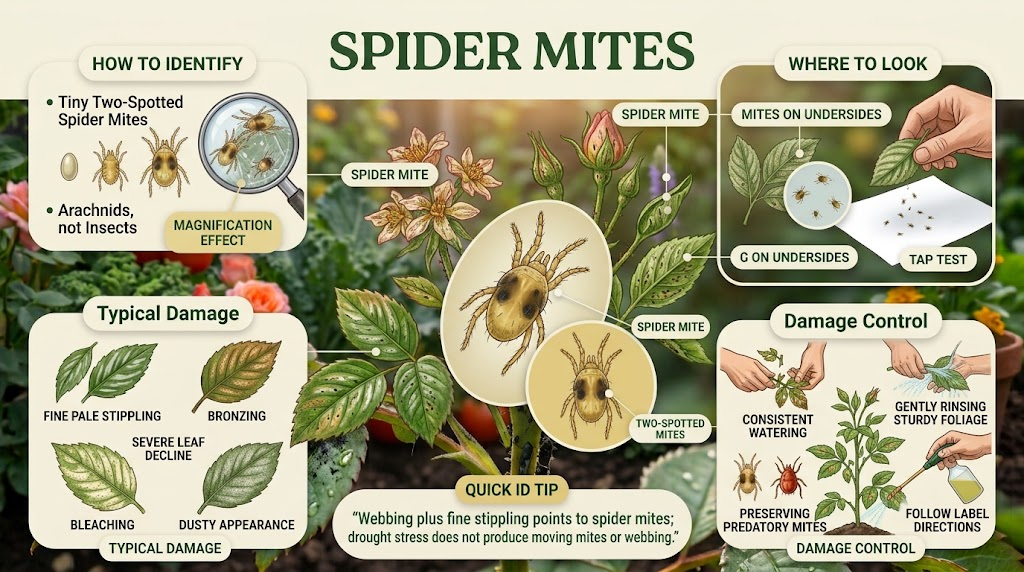
| QUICK ID TIP Webbing plus fine stippling points to spider mites; drought stress can look similar but does not produce moving mites or webbing. |
How to identify: Scale insects often look like small brown, tan, gray, or white bumps attached to stems or leaves. Mealybugs are soft-bodied relatives covered in white, cottony wax, often gathering in leaf joints and protected crevices.
Typical damage: Sap loss causes yellowing, weak growth, leaf drop, and dieback. Many species produce honeydew, so sticky leaves, ants, and sooty mold may appear.
Where to look: Check woody stems, leaf veins, branch crotches, and undersides. On container plants, inspect tight spaces around petioles and new growth.
Damage control: Prune or wipe off small colonies, isolate heavily infested container plants, and manage ants that protect honeydew producers. Horticultural oils can be useful against exposed or immature stages when the label allows their use on the plant.
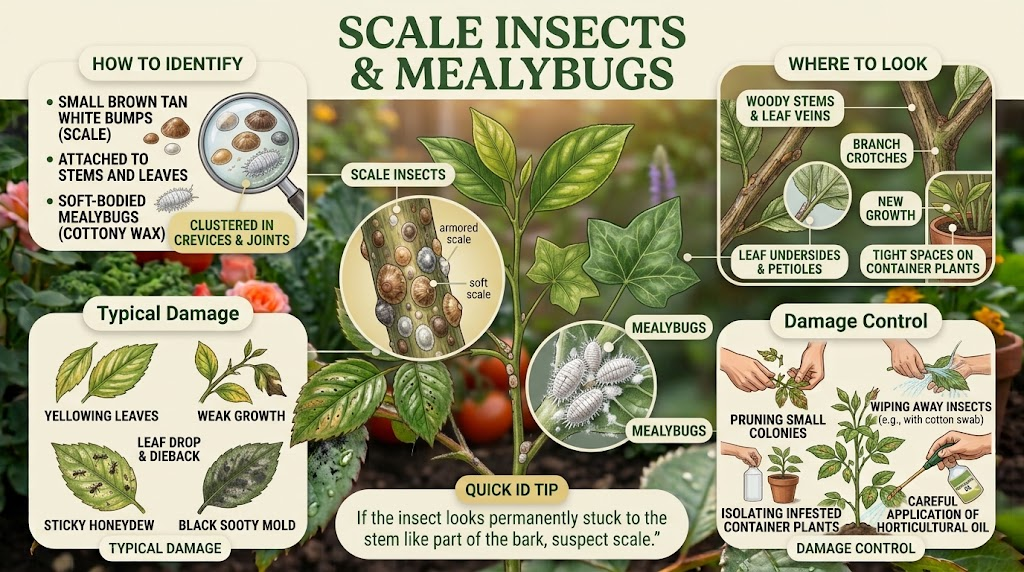
| QUICK ID TIP If the “insect” looks permanently stuck to the stem like part of the bark, suspect scale. |
Common Leaf-Chewing Beetles
Chewing beetles usually leave visible holes, not sticky residue. The shape and scale of the holes – pinpricks, ragged edges, or skeletonized leaves – are useful identification clues.
How to identify: Tiny, shiny beetles that are often black, bronze, blue-black, or striped. They jump quickly when disturbed, which is how they get their name.
Typical damage: Adults chew many small round “shot holes” through leaves. Seedlings can be stunted or killed when pressure is heavy, while larger established plants often tolerate moderate feeding.
Where to look: Watch young brassicas, eggplant, radish, arugula, potato, and other seedlings. Approach slowly and look for tiny beetles hopping from the foliage.
Damage control: Use floating row covers early where practical, keep weeds down, and protect seedlings during their most vulnerable stage. If treatment is needed, choose a product specifically labeled for flea beetles on the crop and follow all harvest-interval instructions.
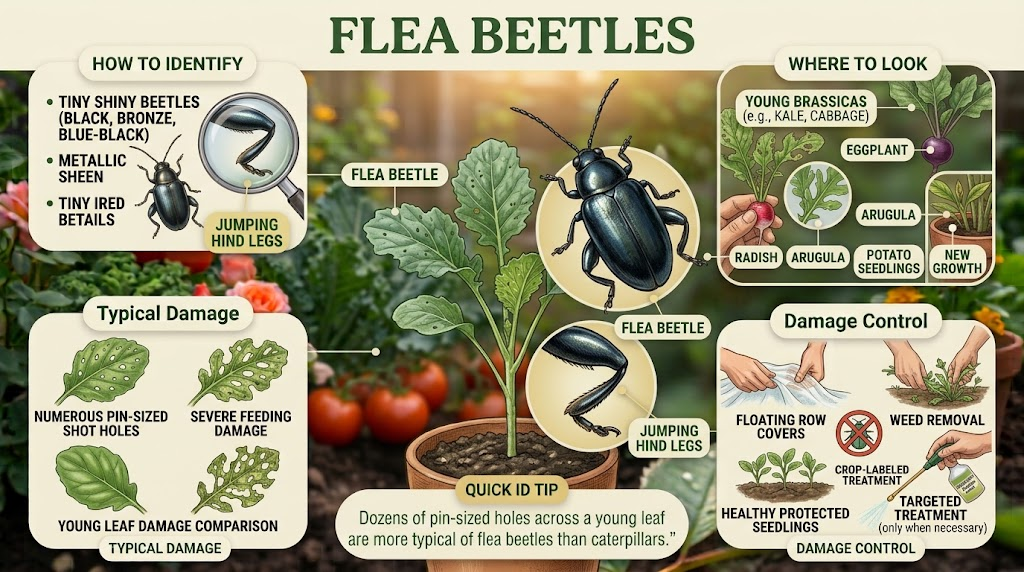
| QUICK ID TIP Dozens of pin-sized holes across a young leaf are more typical of flea beetles than caterpillars. |
How to identify: Small yellow beetles marked with either black stripes or black spots. Adults are easy to notice on flowers and leaves of cucumber-family crops.
Typical damage: They chew holes in leaves, blossoms, and fruit surfaces. Larvae feed on roots. More importantly, some cucumber beetles can spread bacterial wilt, so plants may suddenly wilt after feeding injury.
Where to look: Inspect cucumbers, melons, squash, pumpkins, and gourds, especially flowers and young plants. Look early in the morning when beetles may be less active.
Damage control: Use row covers on young plants until flowering, remove severely diseased plants, and keep the garden free of volunteer cucurbits and weeds that provide habitat. Handpick small populations. Use labeled insecticides only when beetle pressure or disease risk justifies treatment.
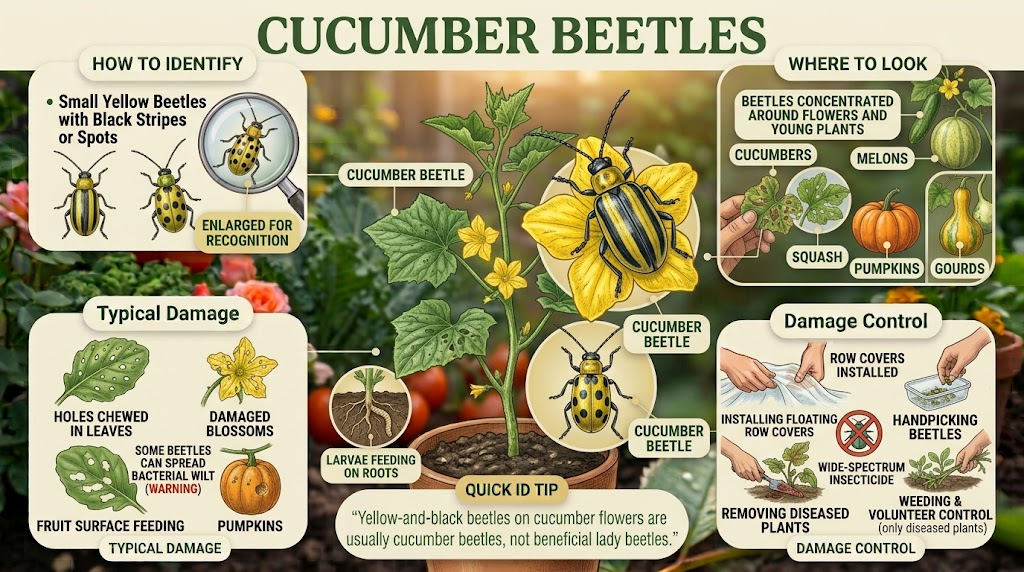
| QUICK ID TIP Yellow-and-black beetles on cucumber flowers are usually cucumber beetles, not beneficial lady beetles. |
How to identify: About half an inch long with a metallic green head and thorax, coppery wing covers, and small white hair tufts along the sides of the abdomen.
Typical damage: Adults eat tissue between leaf veins, leaving a lace-like or skeletonized leaf. They also chew flowers and soft fruit. Their larvae are white grubs that feed in soil, especially turf.
Where to look: Check roses, grapes, beans, raspberries, fruit trees, and many ornamentals during the day. Adults often feed in groups on sunny foliage.
Damage control: For manageable numbers, handpick beetles into soapy water in the cool morning. Protect high-value plants with barriers where practical. Avoid placing lure traps beside susceptible plants because they can draw additional beetles into the area. Treat only when damage warrants it and use crop-labeled products.
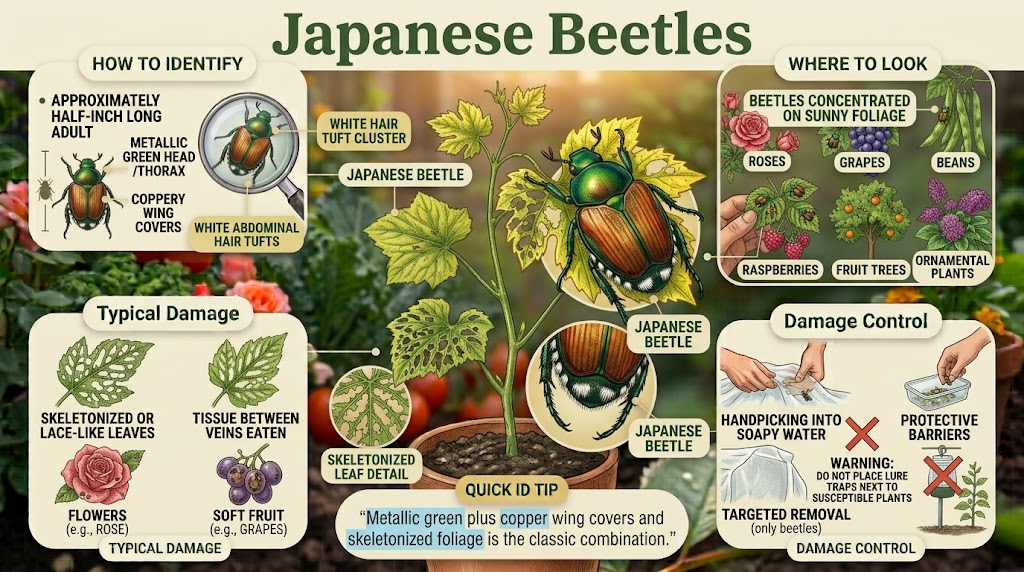
| QUICK ID TIP Metallic green plus copper wing covers and skeletonized foliage is the classic combination. |
How to identify: Rounded yellow-orange beetles with bold black stripes running lengthwise on the wing covers. Larvae are soft, reddish to orange, with rows of black spots.
Typical damage: Adults and larvae chew potato-family foliage rapidly. Heavy infestations can defoliate potatoes, eggplants, and sometimes tomatoes, reducing plant vigor and yield.
Where to look: Check potato leaves for adults, orange egg clusters on leaf undersides, and groups of reddish larvae. Damage can increase quickly as larvae grow.
Damage control: Handpick adults and larvae in small gardens, crush egg masses, rotate crops when space allows, and remove volunteer potatoes. If insecticides are needed, rotate effective modes of action according to label guidance because this pest is well known for developing resistance.

| QUICK ID TIP Striped adults plus orange eggs and reddish larvae on potatoes make identification straightforward. |
Common Caterpillars and Leaf Miners
Caterpillars often leave large bites and visible droppings. Leaf miners are different: their larvae feed between the upper and lower surfaces of a leaf, creating tunnels that cannot be wiped off.
How to identify: Cabbage worms are velvety green caterpillars associated with white butterflies. Cabbage loopers are green caterpillars that move by arching their bodies in a looping motion.
Typical damage: Both chew irregular holes in cabbage, kale, broccoli, cauliflower, collards, and other brassicas. They may feed inside heads and leave greenish droppings among leaves.
Where to look: Inspect leaf undersides, inner leaves, and the center of developing heads. Look for green caterpillars that blend closely with foliage.
Damage control: Handpick caterpillars and eggs, use insect netting or row covers before adults lay eggs, and keep brassica weeds controlled. Bacillus thuringiensis var. kurstaki (Bt) can be effective against young caterpillars when used exactly as labeled.

| QUICK ID TIP Fresh holes plus green pellets of frass often reveal a caterpillar even when the larva is well camouflaged. |
How to identify: Large green caterpillars that can reach several inches long. They have diagonal white markings and a horn-like projection at the rear. Their size is dramatic, but their camouflage makes them easy to miss.
Typical damage: Hornworms can strip leaves and chew green fruit on tomatoes, peppers, eggplants, and related plants. Dark droppings often collect on leaves or the soil beneath feeding sites.
Where to look: Follow fresh defoliation and droppings upward through the plant. Check stems carefully because the caterpillar often aligns itself with them.
Damage control: Handpick in home gardens. If a hornworm is covered with small white parasitoid wasp cocoons, leave it in place because the wasps are beneficial and will help reduce future hornworms. Bt can work best on younger larvae when labeled for the crop.
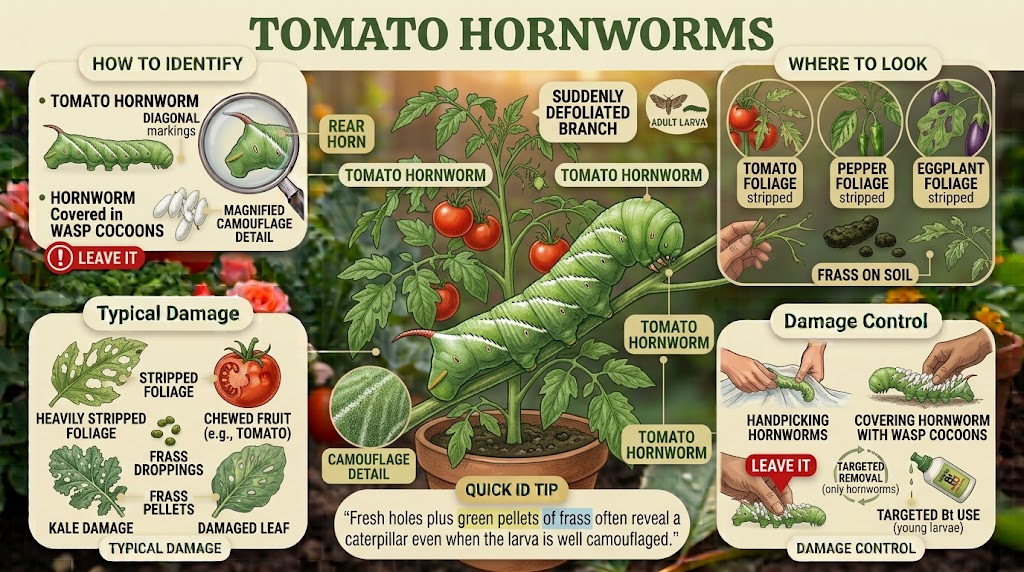
| QUICK ID TIP Large dark droppings under a suddenly stripped tomato branch are often easier to spot than the hornworm itself. |
How to identify: Smooth, thick caterpillars in gray, brown, tan, green, or black. Many curl tightly into a C-shape when disturbed and hide in soil or plant debris during the day.
Typical damage: Young seedlings are clipped at or just above the soil line, sometimes disappearing overnight. Some species also climb plants to feed on leaves, buds, or fruit.
Where to look: Inspect around freshly damaged seedlings in the evening or gently search the top inch of soil within about a foot of the plant.
Damage control: Remove larvae by hand, clear weeds and plant residue that provide hiding or egg-laying sites, and use cardboard or foil collars around valuable transplants. Home-garden insecticides are often unnecessary when the problem is found early.

| QUICK ID TIP A healthy seedling lying beside a cleanly chewed stem at soil level is a classic cutworm sign. |
How to identify: Leaf miners are the larvae of several flies, moths, beetles, or sawflies. The insect is usually hidden inside the leaf, so the mine pattern is more useful than the adult for identification.
Typical damage: Feeding creates pale, winding serpentine tunnels or larger blotchy patches within the leaf. The damaged tissue later turns tan or brown. Leafy greens can become unmarketable or unpleasant to eat even when plant growth is not badly affected.
Where to look: Inspect spinach, chard, beets, beans, tomatoes, cucumbers, onions, and other hosts for fresh pale mines. Hold leaves toward the light to see larvae or frass inside some mines.
Damage control: Remove infested leaves when damage is limited, control host weeds, and use fine insect netting before adult flies reach the crop. Once larvae are inside the leaf, contact sprays usually cannot reach them, so prevention and early removal are more effective.
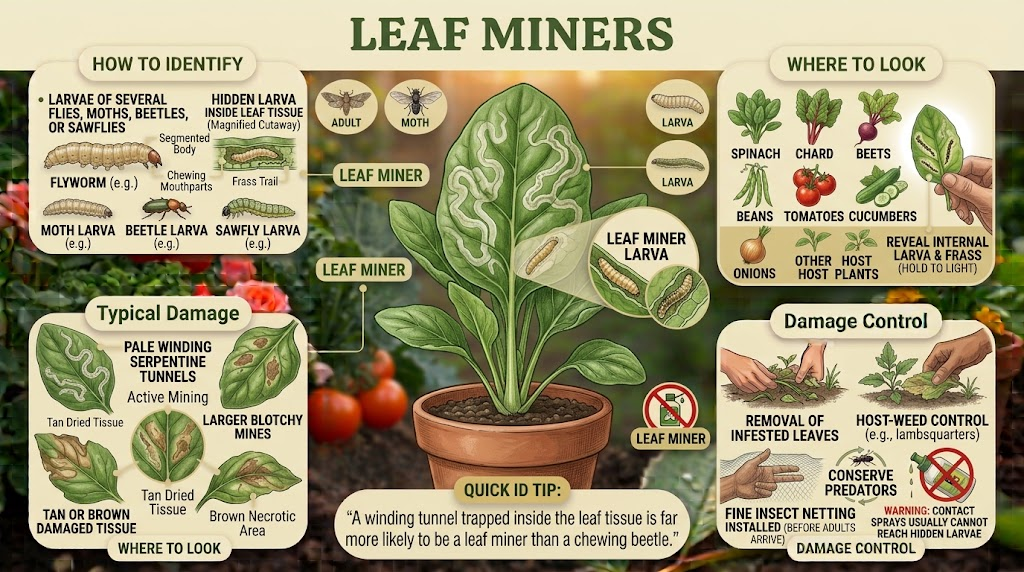
| QUICK ID TIP A winding tunnel trapped inside the leaf tissue is far more likely to be a leaf miner than a chewing beetle. |
Bugs That Cause Wilting, Yellowing, and Fruit Scars
Some true bugs use piercing-sucking mouthparts to remove plant fluids. Their feeding may not create obvious holes, but it can interrupt water movement, collapse vines, or leave fruit distorted and corky.
How to identify: Flattened, gray-brown to dark brown insects found on squash-family plants. Young nymphs are smaller and often gray or light green with dark legs. Bronze to brown egg clusters are commonly attached to leaf undersides.
Typical damage: Feeding causes yellow spots, wilting, blackened tissue, and vine decline. Young squash and pumpkin plants are more vulnerable than large, established vines.
Where to look: Inspect leaf undersides for egg clusters and nymph groups, then check the plant crown, base, and debris where adults hide.
Damage control: Crush or remove egg clusters, handpick adults and nymphs, remove old cucurbit debris after harvest, and use boards as temporary hiding traps that can be checked each morning. Target young nymphs if a labeled pesticide becomes necessary, because adults are harder to control.
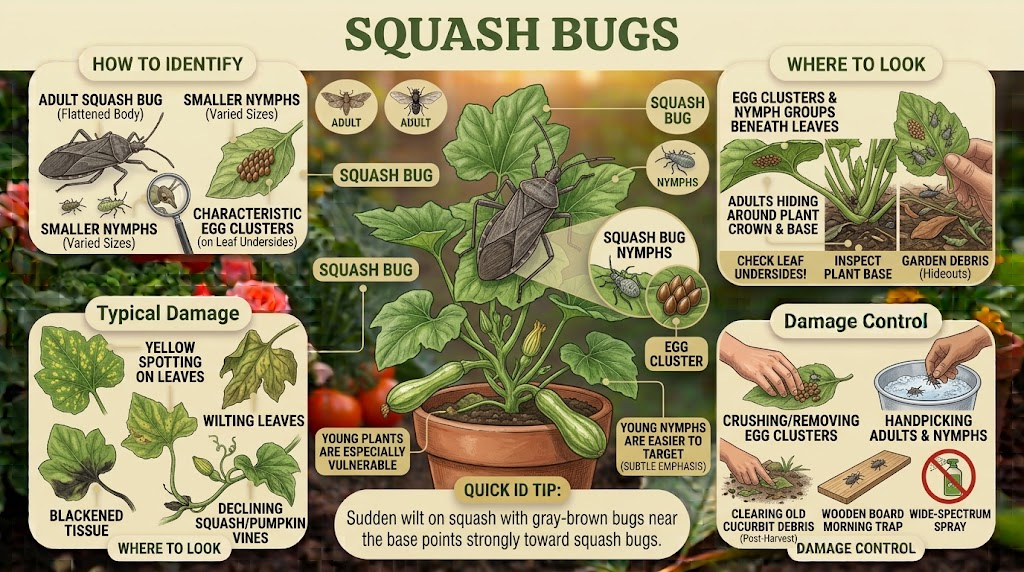
| QUICK ID TIP Sudden wilt on squash with gray-brown bugs near the base points strongly toward squash bugs. |
How to identify: Shield-shaped bugs that may be green, brown, or mottled. Different species vary in markings, and both adults and nymphs can feed on garden crops.
Typical damage: Piercing feeding can cause dimples, corky spots, discoloration, misshapen fruit, aborted seeds, or distorted pods. Tomatoes, peppers, beans, corn, and many fruits may be affected.
Where to look: Look on fruit clusters, leaf undersides, and weeds around the garden. Egg masses are often laid in tidy groups on leaves.
Damage control: Handpick small numbers, remove weed hosts, and keep row covers on vulnerable crops when compatible with pollination. If chemical control is needed, choose a product labeled for both the crop and the specific pest and apply only where damage justifies it.
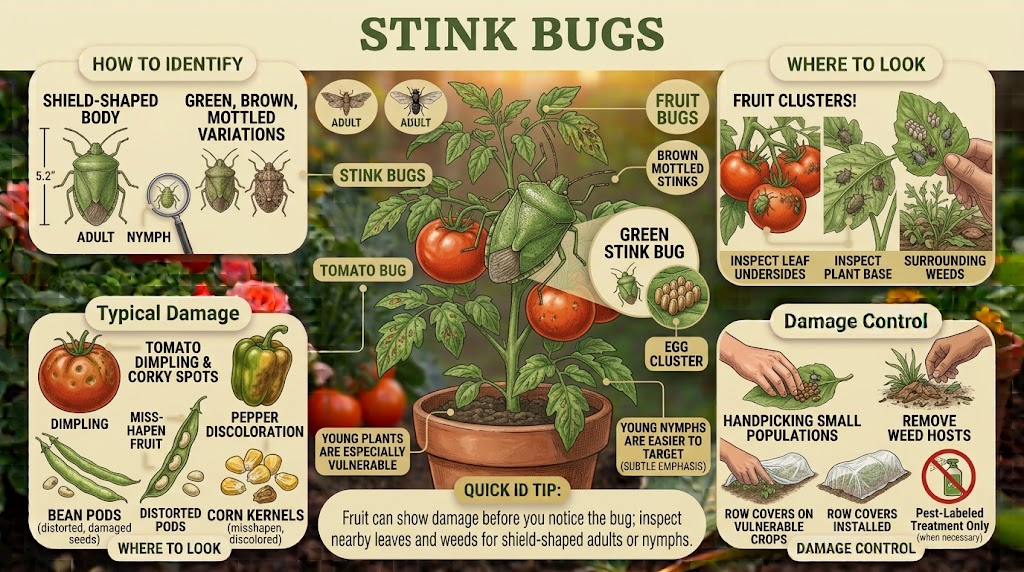
| QUICK ID TIP Fruit can show damage before you notice the bug; inspect nearby leaves and weeds for shield-shaped adults or nymphs. |
Moisture-Loving and Soil-Associated Pests
Not every garden pest spends the day on foliage. Some hide under mulch, pots, boards, or in the root zone, so you may need to inspect at night or dig gently around stressed plants.
How to identify: Soft-bodied mollusks that move on a muscular foot and leave a mucus trail. Snails carry an external shell; slugs do not. They are most active in cool, damp conditions and at night.
Typical damage: Irregular ragged holes appear in leaves, flowers, and ripening fruit. Seedlings can be eaten to the ground. Dried silver-colored slime trails are a useful clue.
Where to look: Check under pots, boards, stones, dense mulch, low foliage, and shady groundcovers after dark or early in the morning.
Damage control: Reduce overly damp hiding places, improve air circulation, water in the morning, handpick at night, and use boards as traps. If bait is needed, iron phosphate products can be a lower-risk option when used according to the label.

| QUICK ID TIP Ragged holes plus a shiny slime trail is one of the easiest pest-damage combinations to identify. |
How to identify: Elongated brown insects with a distinctive pair of forceps-like pincers at the rear. They hide during the day and become active at night.
Typical damage: Earwigs are omnivores. They may chew seedlings, soft fruit, flowers, corn silks, or tender leaves, but they also eat aphids and other small pests. Damage is usually irregular and is often confused with slug or caterpillar feeding.
Where to look: Look beneath boards, pots, mulch, and garden debris. Roll up damp newspaper or corrugated cardboard overnight to see whether earwigs are using it as shelter.
Damage control: Only control them when feeding damage is clearly significant. Reduce damp shelter near vulnerable plants, trap and remove concentrated populations, and avoid killing them automatically because they can also act as predators.

| QUICK ID TIP Finding earwigs near damage does not prove they caused it; check for slime trails and caterpillar frass before deciding. |
How to identify: Creamy white, C-shaped larvae with brown heads and three pairs of legs near the head. Several beetle species have grub-like larvae in the soil.
Typical damage: Root feeding can cause weak growth, wilting, poor establishment, or patches of turf that lift easily because roots have been pruned. Container and garden plants may decline even when watering seems adequate.
Where to look: Dig carefully around the root zone of a stressed plant or lift a small section of affected turf. Count larvae rather than assuming one grub is responsible for the entire problem.
Damage control: Improve plant vigor and avoid unnecessary treatment when numbers are low. Management depends heavily on the grub species, crop, timing, and local thresholds, so confirm identification before applying a soil insecticide or biological treatment.
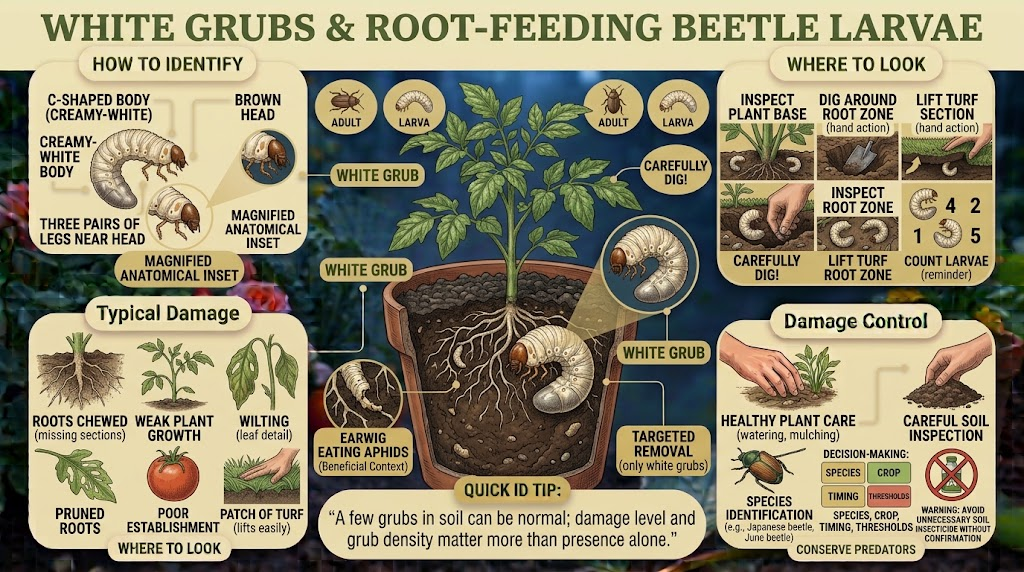
| QUICK ID TIP A few grubs in soil can be normal; damage level and grub density matter more than presence alone. |
Beneficial Garden Bugs You Should Not Mistake for Pests
One of the most important parts of garden pest identification is knowing when not to control an insect. Predators and parasitoids can suppress aphids, caterpillars, mites, slugs, and other pests without any spray at all.

Ground Beetles
Ground beetles are usually dark brown or black, somewhat flattened, fast runners with long legs and obvious jaws. They hide under stones, logs, mulch, pots, and leaf litter during the day and often hunt at night. Outdoors, many species are beneficial predators that feed on insects and other invertebrates. If one races away when you lift a pot, leave it alone unless it has simply wandered indoors.
Lady Beetles, Lacewings, and Parasitoid Wasps
Adult lady beetles are familiar, but their larvae look very different: dark, elongated, and often marked with orange. Lacewing larvae have curved jaws and are active hunters of aphids, whiteflies, mites, and small caterpillars. Tiny parasitoid wasps may be difficult to notice, but a swollen tan “mummy” aphid with a round exit hole is evidence that they are working. Preserve these helpers by avoiding unnecessary broad-spectrum pesticide use and by keeping flowering plants available for nectar and pollen.
| GOOD BUG RULE If you cannot match an insect to the damage, do not treat it yet. Observe what it is doing: feeding on the plant, feeding on another insect, or simply passing through. |
A Practical Damage-Control Plan: Use the IPM Ladder
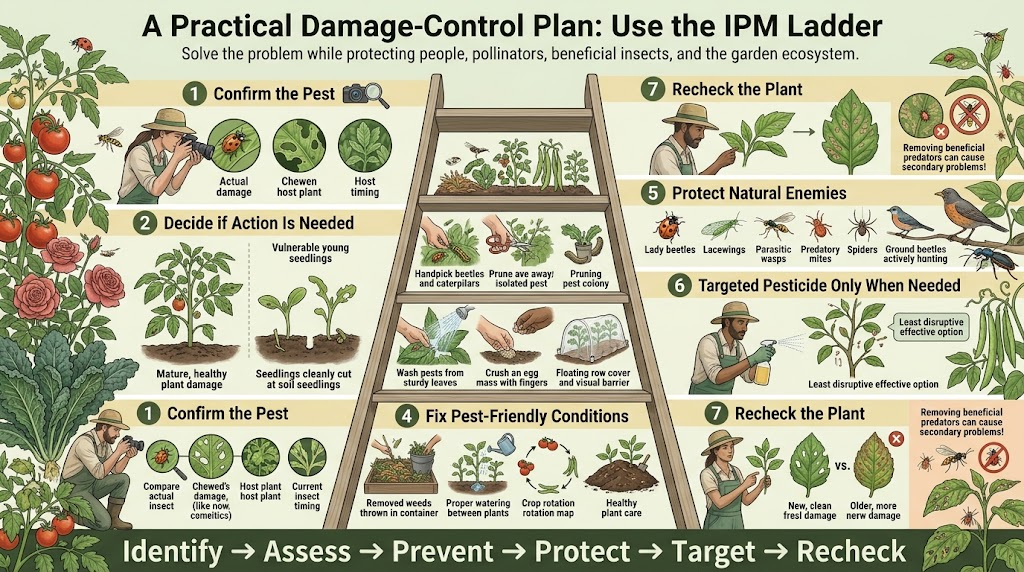
Integrated pest management (IPM) does not mean never using pesticides. It means making control decisions in an order that solves the problem while reducing unnecessary risk to people, pollinators, beneficial organisms, and the garden ecosystem.
1. Confirm the pest. Match the insect, damage, host plant, and timing. If the ID is uncertain, photograph it and ask a local extension service or qualified horticulture professional.
2. Decide whether action is needed. A few chewed leaves on a mature plant may be cosmetic. A single cutworm beside newly planted seedlings can justify immediate physical removal.
3. Start with physical control. Handpick beetles and caterpillars, prune isolated colonies, wash aphids or mites from sturdy plants, crush egg masses, or use barriers and row covers.
4. Fix the conditions that favor the pest. Reduce weeds and crop debris, avoid overwatering, improve airflow, rotate susceptible crops where practical, and keep plants appropriately watered and fertilized so stress does not magnify pest damage.
5. Protect natural enemies. Lady beetles, lacewings, parasitic wasps, predatory mites, spiders, birds, and ground beetles can provide continuous background control.
6. Use a targeted pesticide only when needed. Choose the least disruptive effective option that is labeled for the pest and plant. Treat the affected area rather than spraying the entire garden when spot treatment will do.
7. Recheck the plant. Control is not complete until you confirm that new damage has slowed and that the treatment did not create a new problem, such as mite flare-ups after predators were removed.
How to Prevent Pest Problems Before They Build

- Inspect new plants before purchase. Check leaf undersides, stems, and growing tips for insects, eggs, webbing, sticky residue, and scale bumps.
- Choose the right plant for the site. Sun, soil, drainage, and climate stress can make plants more vulnerable to pests.
- Water the root zone appropriately. Chronic drought can favor mites; constantly wet, shaded surfaces can favor slugs and some disease problems.
- Keep weeds and old crop debris under control. They can provide alternate hosts and protected hiding sites.
- Use barriers early. Fine insect netting and row covers work best before pests reach the crop. Remove or manage covers when pollination is required.
- Rotate crops when space allows. Moving related vegetables can reduce carryover from some crop-specific pests, although rotation is less useful for highly mobile insects.
- Scout on a schedule. A quick inspection once or twice a week is easier than managing a large infestation discovered at harvest time.
- Keep a garden record. Note which pest appeared, when it arrived, what plant it attacked, and what worked. Next season, you can monitor earlier and respond faster.
Pest Damage or Something Else?
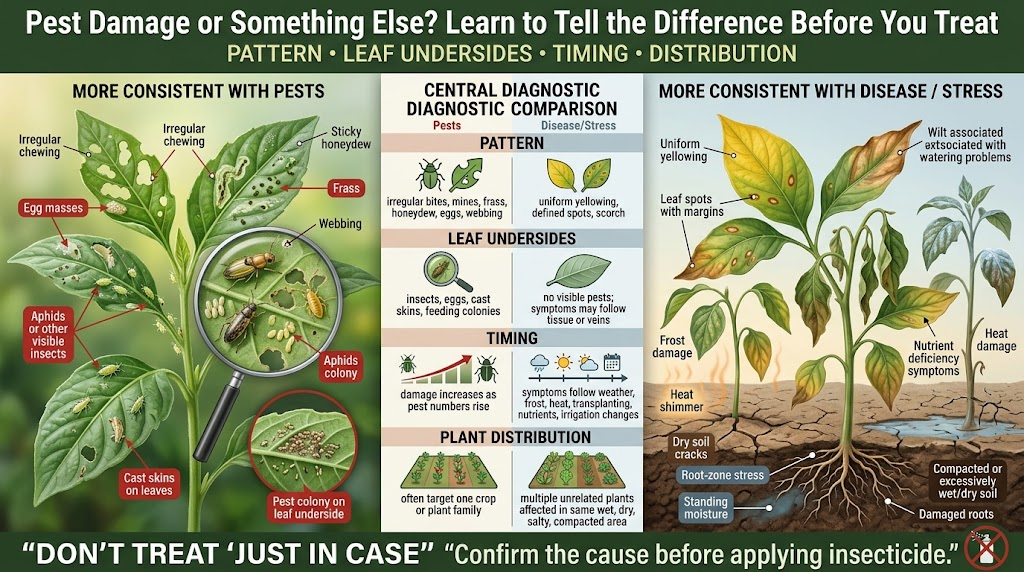
Not every hole, yellow leaf, or wilted stem is caused by insects. Before reaching for a treatment, compare pest clues with other common causes:
| Clue | More consistent with pests | More consistent with disease / stress |
| Pattern | Irregular bites, mines, frass, honeydew, egg masses, webbing or insects present | Uniform yellowing, spots with distinct margins, widespread scorch, or symptoms tied to watering/weather |
| Leaf undersides | Pests, eggs, cast skins or feeding colonies visible | No pest evidence; lesions may pass through tissue or follow veins |
| Timing | Damage increases as pest numbers rise | Symptoms follow frost, heat, transplant shock, nutrient imbalance or irrigation changes |
| Plant distribution | One crop or plant family is targeted | Many unrelated plants in the same wet, dry, salty or compacted area are affected |
If the symptoms do not clearly match a pest, avoid applying insecticide “just in case.” It will not correct nutrient, root, disease, or weather problems and may kill beneficial insects that are helping the garden.
Frequently Asked Questions
What is the easiest way to identify a garden pest?
Start with the damage. Note the host plant, affected plant part, hole or discoloration pattern, and any evidence such as droppings, webbing, honeydew, slime trails, eggs, or mines. Then inspect leaf undersides and nearby soil for the pest.
What bugs make tiny holes in garden leaves?
Flea beetles are a common cause of many small round shot holes, especially on seedlings. Small caterpillars, weevils, slugs, and other beetles can also create holes, so check the shape of the damage and look for the pest before treating.
What pest makes leaves sticky?
Aphids, whiteflies, mealybugs, and many soft scales excrete sugary honeydew. The sticky coating may later support black sooty mold and attract ants.
What causes silver or bronze patches on leaves?
Thrips can create silvery scarring, while spider mites often cause fine pale stippling that progresses to bronzing. Look for black thrips specks or spider-mite webbing to separate the two.
What eats plants at night?
Slugs, snails, cutworms, earwigs, and some beetles are more active at night. Inspect after dark with a flashlight and check beneath pots, mulch, boards, and low foliage.
Should I kill every beetle I find in the garden?
No. Ground beetles and lady beetles are examples of beneficial predators. Identify the beetle and confirm that it is feeding on the plant before you decide it needs control.
When should I use insecticidal soap or horticultural oil?
These products are often most useful against exposed, soft-bodied pests such as aphids, whiteflies, mites, mealybugs, or scale crawlers. They generally need good contact coverage. Always confirm the label allows use on your plant and pest, and follow temperature, timing, and repeat-application directions.
When should I call an expert?
Get help when the pest cannot be identified, a valuable tree or shrub is declining quickly, an invasive or regulated pest is suspected, damage continues despite reasonable control, or pesticide selection is unclear. Local cooperative extension offices are especially useful for identification.
